




















































































Converge ICT Solutions Inc. stabilized services quickly following a Friday submarine cable disruption between the Philippines and Singapore by immediately rerouting traffic to alternative paths, mostly through the new Bifrost international cable system.
“This allowed none to minimal disruption in our services to both our residential and enterprise customers due to the cable issue between Singapore and the Philippines,” said Converge CEO Dennis Anthony Uy. Following last Friday’s disruption, some customers experienced difficulties accessing applications and websites hosted in Singapore.
“We have planned our investments in these international cable systems as early as five years ago precisely in anticipation of these incidents. Our investments in Bifrost along with SEA-H2X (Southeast Asia – Hainan – Hong Kong Express Cable) have allowed us to achieve international network redundancy that’s most important at a time like this,” he said.
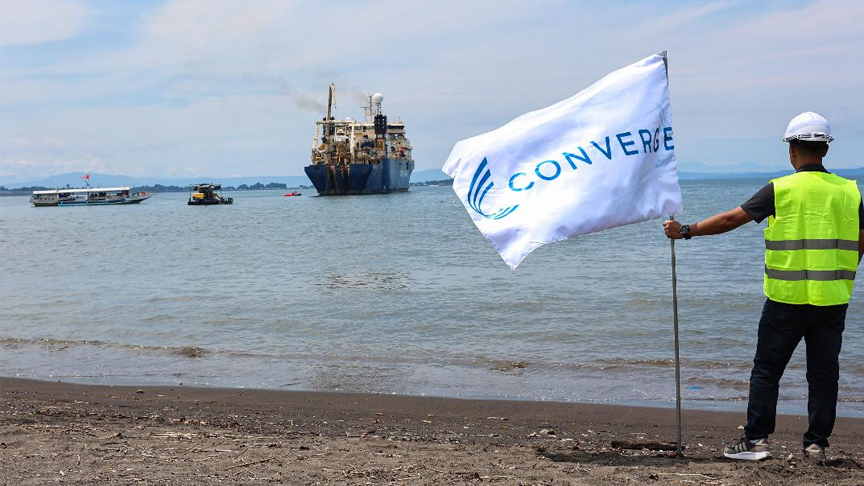
Spanning over 20,000-kilometers, the Trans-Pacific Bifrost Cable System links the Philippines to Singapore, Indonesia, Guam, and the US, delivering a total design capacity of over 240 Terabits per second (Tbps). Converge serves as the Philippine landing party via its landing station in Davao and owns one fiber pair in the trunk.
The 6,000-kilometer SEA-H2X is the submarine cable connecting China (Hongkong), China (Lingshui, Hainan), the Philippines (La Union), Thailand (Songkhla), and Singapore, with a system design capacity of over 200 Tbps. Converge is part of the consortium that owns SEA-H2X that includes China United Network Communications Group Company Limited and China Mobile International.
“With the additional capacity from these two new cables, Converge not only has the youngest but it also has the most resilient international network among Philippine operators today,” said Uy.
“With the current high demand for artificial intelligence (AI) and cloud computing, international data traffic will just continue to rise. This is the reason we have invested early in these international cable systems and data centers and we will continue to do so given the growing demand,” said Uy. “This is part of our vision to make the Philippines into a digital gateway between Asia and the rest of the world.”