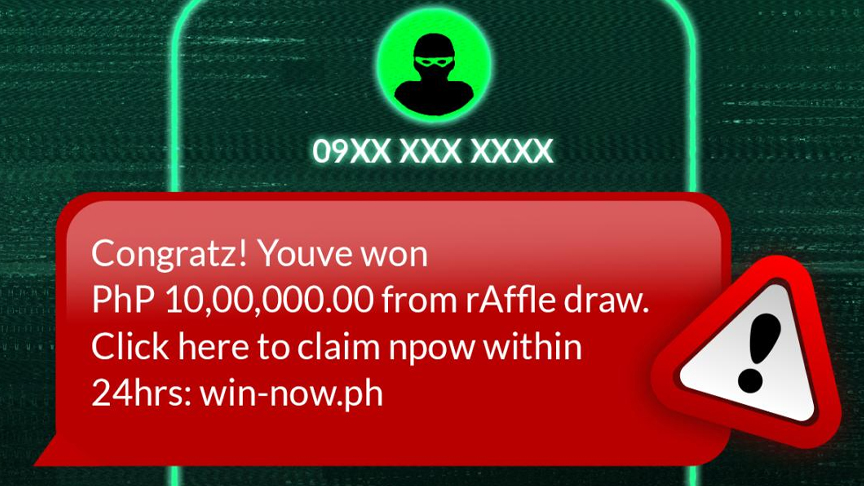
PLDT’s wireless unit Smart Communications, Inc. (Smart) is boosting efforts to fight text scams with the launch of its public reporting portal called HULISCAM.
“Fighting scams and fraud requires collaboration between telco companies like PLDT and Smart, and the public. We have activated our HULISCAM platform to make it easier for our customers to report unsolicited messages and the mobile number that sent these messages,” said Jojo Gendrano, SVP and Chief Information Security Officer of PLDT and Smart.
Customers who received text scam and other phishing messages are encouraged to report these incidents to HULISCAM at https://smart.com.ph/huliscam. The portal will ask customers to provide the mobile number that sent the unsolicited message, the suspicious message, as well as the malicious link embedded in the text message.
“Smart assures customers that we will investigate these suspicious messages and take the necessary steps to protect our customers from scams and fraud. Smart also coordinates with law enforcement agencies to apprehend personalities behind these illegal activities,” said Atty. Roy Ibay, VP and Head of Regulatory Affairs at PLDT and Smart.
PLDT and Smart have been stepping up efforts to fight mobile technology-aided crimes. The HULISCAM portal complements the new and more advanced network firewall that the PLDT Group had recently activated to block malicious messages from passing through its network. In the month of August alone, Smart has prevented almost 300 million SMShing messages from reaching customers. It has also blocked more than 845,000 mobile numbers tied to phishing, scams and other illegal activities in the first eight months of the year.
To further weed out personalities with malicious intent from accessing its services, Smart has strengthened its SIM registration system by introducing enhanced verification tools and advanced technology including ‘live selfie feature, liveness checks, and the disabling of stock selfies to combat fraudulent activities. This move focuses on stopping the use of fake IDs and photos during registration.
Smart also constantly engages provincial distributors, regional dealers and other trade partners to ensure the security and integrity of the sale and distribution process of Smart SIMs.
Likewise, the group’s #BeCyberSmart and #MagingCyberSmart campaign continues to share practical tips on identifying techniques used by scammers to run their fraudulent activities. Customers can avoid falling prey to these nefarious activities by remembering the acronym – SCAM.
S is for ‘Suspicious’. Never answer calls or respond to messages from unverified or unknown numbers. Banks do not usually initiate calls nor send SMS asking for your bank account details. Likewise, official bank and telco representatives will never ask for OTPs.
C is for ‘Clickbait’. Scam texts often bait victims with too-good-to-be-true offers or prize winnings, urging them to click the link to avail of the limited-time offer.
A is for ‘Alarming’. Scammers create a sense of fear or dread to prod potential victims into sharing sensitive information.
M stands for ‘Malicious’. Text scams or emails are often accompanied by a link that leads to a phishing website.
Other than the HULISCAM portal, customers may also report cyber threats to Smart’s verified and official social media pages – Smart Communications on Facebook and @SmartCares on X – or call our hotline *888.