



















































































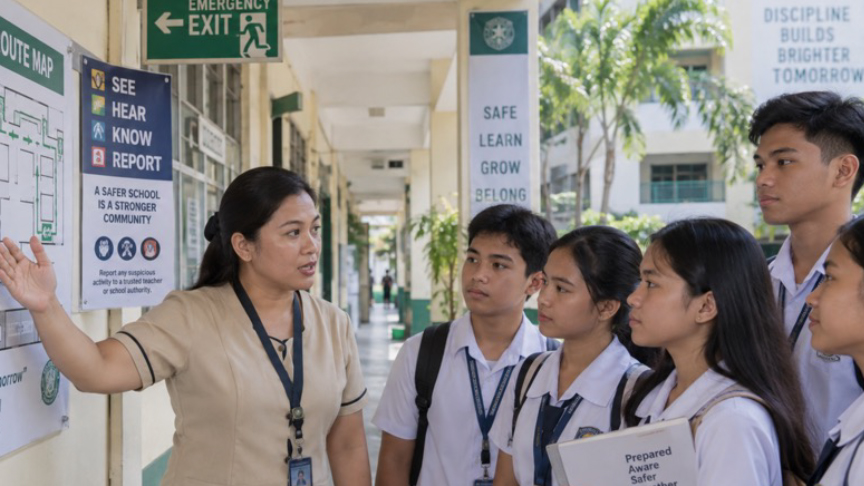
Recent fatal shootings in Philippine schools and a nationwide school safety drill by the Department of Education have intensified attention on how schools prepare for threats — and what can happen before a situation reaches the point of crisis.
The incidents include shootings at San Jose National High School in Tacloban City on June 22, Ateneo de Zamboanga University on Aug. 18, and Banga National High School in South Cotabato on Sept. 18.
Between the Zamboanga and South Cotabato incidents, DepEd conducted a nationwide simultaneous school safety drill on Sept. 3 as part of efforts to strengthen preparedness for armed threats and other emergencies. But emergency response is only one part of school safety. Another question comes earlier: What could keep someone from speaking up when they notice something concerning?
An Aug. 11 survey by Agile Data Solutions Inc. points to one potential barrier. The survey was conducted after the Tacloban shooting and before the subsequent incidents in Zamboanga and South Cotabato, as well as DepEd’s Sept. 3 nationwide drill.
At the time, 86.7% of respondents already considered school threats very or extremely serious, while 80.2% said they were likely or very likely to report suspicious activity. Yet when asked what could discourage them from reporting, the most commonly cited barrier was fear of being wrong, at 33.4%. Lack of trust in authorities followed at 25.3%, while 22% cited fear of retaliation and 14.8% said not knowing whom to report to could discourage them. Another 29.4% said nothing would discourage them from reporting.
Together, the findings point to an important part of school-safety preparedness: people may be willing to speak up while still facing uncertainty over whether what they have seen or heard is serious enough to raise.
Fear of making the wrong call
Not every concerning situation arrives as an obvious emergency.
A direct threat may be easier to recognize. Other situations may involve threatening language, escalating intimidation, an alarming message or social-media post, or behavior that raises concern without immediately making the level of risk clear. In those situations, deciding whether to speak up may involve uncertainty over whether the concern is serious enough to report.
Among the barriers presented in the survey, fear of being wrong was the most commonly selected, at 33.4%. That puts attention on an element of school preparedness that can be less visible than cameras, checkpoints or emergency drills: whether people understand what they can report and where they can bring a concern.
Clear reporting procedures can help define what kinds of behavior or information should be raised, whom students and others should approach, and what steps they can take when something causes concern. Reporting a concern is also different from determining whether a threat is genuine. Students, parents and other members of a school community can bring concerning information to responsible personnel, who can then assess the situation and determine the appropriate response.
Eight in 10 say they are willing to report
The leading barrier is particularly notable because respondents otherwise expressed high willingness to speak up. Overall, 80.2% said they were likely or very likely to report suspicious activity. The reasons that could discourage them point to different challenges surrounding that decision.
- Fear of being wrong, cited by 33.4%, centers on uncertainty over whether something warrants being raised.
- Lack of trust in authorities, cited by 25.3%, points to confidence in the people or institutions expected to receive a report.
- Fear of retaliation, at 22%, reflects concern about possible consequences for the person speaking up.
- Another 14.8% cited not knowing whom to report to.
The figures show that encouraging reporting involves more than simply asking people to speak up. It also involves making the process clear, accessible and trusted.
Knowing how to report is linked to stronger reporting intent
Another survey finding reinforces the importance of procedural knowledge. Overall, 77.3% of respondents said they knew how to report a school threat. Among those who said they knew how to report, 54.6% said they were very likely to report suspicious activity. That compared with 21.8% among respondents who were unsure how to report and 23.1% among those who said they did not know how.
The difference is substantial.
Respondents who knew how to report were more than twice as likely to describe themselves as very likely to report suspicious activity compared with those who were unsure or unaware of the procedure. The figures put a practical dimension on the reporting question. Willingness to speak up is one part of the process. Knowing where to go, whom to approach and what steps to follow is another.
DepEd drill puts preparedness in focus
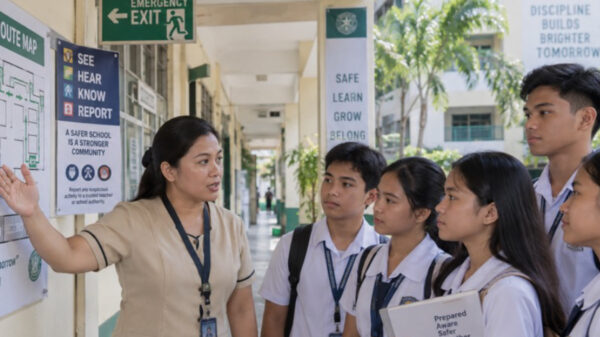
DepEd’s Sept. 3 nationwide simultaneous school safety drill placed renewed attention on emergency preparedness following the shootings in Tacloban and Zamboanga. The exercise focused on how schools should respond to armed threats and other emergencies, including alert systems, lockdown procedures, emergency communication, coordination and first-aid response. The drill addressed what schools should do when danger becomes immediate.
The survey findings highlight an earlier part of the safety process: whether people know how to raise a concern when something troubling first comes to their attention. These are different stages of preparedness.
Emergency protocols provide a framework for responding when an incident is underway. Reporting procedures provide a channel for concerns to be raised earlier. Both depend on people understanding what they are expected to do.
Knowing where to report is only part of the picture
The survey also shows that awareness of the reporting channel is not the only issue respondents identified.
Not knowing whom to report to was cited by 14.8%, the lowest of the four listed barriers. More respondents pointed to fear of being wrong, lack of trust in authorities and fear of retaliation. That broadens the reporting question beyond simply providing a telephone number, office or online channel. People need to know where to report, but they also need to understand what can be reported and how concerns will be handled.
For schools, clear reporting guidance can include identifying the appropriate channels, explaining what types of behavior or information should be raised, and making the process understandable to students, parents and school personnel. That becomes particularly relevant when a concern does not initially look like an emergency.
Violent bullying was the most commonly cited threat experience
The reporting findings also connect with respondents’ experiences of school threats. Overall, 27.2% of respondents said they had personally experienced or witnessed some form of school threat. Among that subgroup, 52% cited bullying involving violent threats. Physical violence followed at 28.6%, online or social-media threats at 26.9%, and bomb threats at 22.1%. The prominence of bullying involving violent threats adds another dimension to the reporting issue.
School-safety concerns are not limited to extreme incidents such as shootings or bomb threats. Threatening language, intimidation and escalating conflict can also create situations in which students and others must decide whether something should be raised. This places reporting within everyday school life as well as emergency preparedness.
The question is not only whether schools know what to do when an emergency occurs, but whether students, families and school personnel know what to do when they first encounter behavior that causes concern.
Respondents favor multiple layers of school safety
The wider survey also suggests that respondents see school safety as extending beyond any single security measure. CCTV coverage was selected by 53.3%, nearly tied with stronger disciplinary policies at 53.1% and student awareness programs at 52.3%. Campus security personnel followed at 50.5%, while 47.7% selected entry and exit checkpoints. The narrow spread between these choices is notable. Respondents placed rules and awareness programs alongside cameras, guards and checkpoints rather than concentrating overwhelmingly on one type of intervention.
The results point toward different layers of school safety serving different purposes. Cameras, guards and checkpoints address physical security. Emergency drills prepare schools for situations in which danger becomes immediate. Rules and awareness programs can help establish expectations around behavior and safety. Reporting procedures provide a way for information and concerns to reach the people responsible for responding to them.
Speaking up can begin with a concern
The recent shootings have intensified the school-safety conversation in the Philippines, while DepEd’s nationwide drill has placed greater attention on what schools should do when confronted with an immediate threat.
The survey highlights a quieter part of the same conversation. Most respondents say they are willing to report suspicious activity. Most also say they know how to report a school threat. Respondents who knew how to report were also much more likely to say they were very likely to speak up. Yet when respondents were asked what could discourage them from reporting, the most commonly cited barrier was fear of being wrong.
For schools and communities, that puts clarity at the center of the reporting conversation. People need to know what kinds of concerns can be raised, where to bring them and what steps to take when something does not seem right. Preparedness is not only about knowing what to do when an emergency begins. It can also mean knowing what to do when there is a concern worth raising.