













































































Every time a Filipino taps “send” on an e-wallet, streams a video, or logs into an online banking app, that transaction travels through a chain of physical infrastructure most people never see. At the center of that chain sits a secure facility housing the servers that store, process, and move the country’s digital life called a data center. It is, in effect, invisible until it isn’t.
That understated presence belies its importance. Modern data centers now function as core digital infrastructure. They are foundational, continuous systems that keep digital connectivity, and by extension, the digital economy, running. A payroll system, a hospital’s patient records, a bank’s transaction ledger, an employee’s tax records, or social security and health insurance information; all of these depend on servers staying online, secure, and available every hour of every day.
Where servers reside is just as vital as how they operate. Hosting sensitive citizen and government data within the Philippines can support the country’s digital sovereignty and compliance with applicable data residency requirements, such as Executive Order 119. The order establishes a classification and data residency framework for government data, with residency requirements depending on the sensitivity and classification of the data.
Keeping this infrastructure onshore will support compliance with applicable Philippine data residency requirements and safeguard data sovereignty, security, and service continuity. That is a distinction with real consequences; for national security, for privacy, and for continuity of service in the event of undersea cable disruptions or foreign platform outages. Local hosting also reduces the physical distance data has to travel, helping everyday transactions process more quickly.
Separating Essential Infrastructure from Market Noise
Over the past two decades, data centers in the Philippines have evolved alongside the country’s digital economy. What began as infrastructure supporting telecommunications and internet reliability has expanded into enterprise facilities serving banks, government agencies, and large businesses, and more recently, hyperscale and AI-focused facilities built for increasingly demanding workloads. These different types of data centers are not built the same way.
Multi-tenant enterprise data centers, which host banks, telecommunications providers, and government systems, operate under a fundamentally different engineering model than high-density AI training hubs. Power draw, cooling architecture, water utilization, and physical footprint differ substantially between the two.
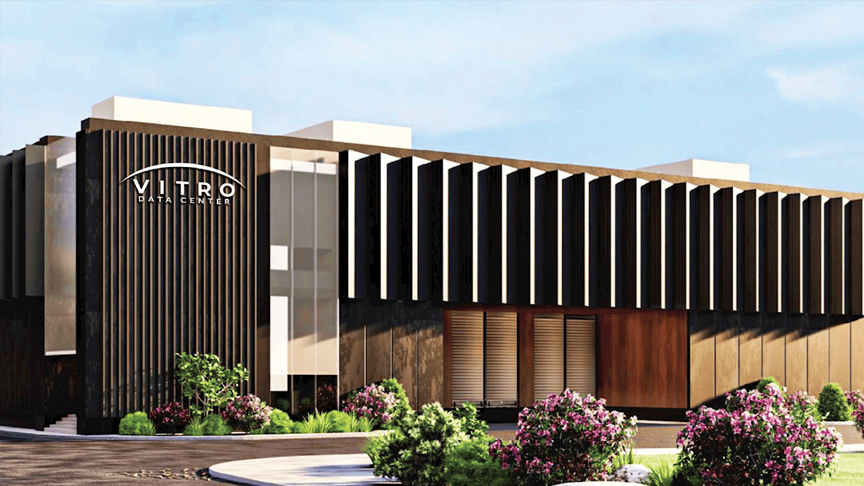
For example, VITRO REIT’s and ePLDT’s data centers are situated within established commercial business districts. They serve banks, telecommunication companies, and government agencies, among others. Connected to the country’s domestic and international fiber backbone through PLDT and other local telecommunications companies, these facilities provide the stable infrastructure needed to support the digital services Filipinos already rely on every day.
Operators in this segment are increasingly focusing on energy-efficient infrastructure, closed-loop cooling technologies, and the use of renewable energies. Many are exploring green initiatives as the sector matures alongside the country’s broader digital and sustainability ambitions.
Powering the Country’s Digital Acceleration Ambition
The economic case extends well beyond the facilities themselves. Secure, reliable colocation infrastructure gives Philippine businesses the resilient digital foundation they need to migrate to cloud platforms and scale with confidence, rather than depend entirely on infrastructure hosted overseas.
Expanding domestic data center capacity also strengthens the country’s competitiveness as an investment destination. It draws in technology capital, which may create new career pathways for local engineers, IT professionals, and cybersecurity talent. These are critical labor especially with the ambition of the country towards digital acceleration.
Ultimately, the case for data centers is a case for progress and inclusion. Data centers may be the least visible part of the digital economy, however, they are an essential foundation towards the country’s digital acceleration ambition. They allow MSMEs to take advantage of digitization, help make everyday digital life more frictionless, and it opens doors for more sectors to take part in the country’s next wave of digital innovation.
Behind every seamless digital experience is infrastructure working reliably in the background, helping power a nation moving forward.