In 2020, remote work became the norm as organizations worldwide were forced to rapidly shift their operational models. However, even once the COVID-19 pandemic subsides and some employees move back into the office, many others will continue working from home into the future. Indeed, “work” is increasingly viewed as something we do as opposed to a place we commute to and from.
With this in mind, security and IT teams must adjust their strategies to manage this new hybrid workforce at scale effectively. Below we highlight the factors that play into the security of these environments, including the cloud, general security infrastructures, and employee cybersecurity awareness.
Accelerating Trends and 5G for Network Performance and Security
Organizations have long been cautioned against the dangers of a piecemeal security approach that can leave gaps in protection. They have also been warned that a lack of a comprehensive, coherent digital transformation strategy with an integrated security solution presents long-term challenges. And this was before the pandemic hit.
When COVID-19 entered the picture, workforces around the world transitioned to a remote structure with little warning. This meant networks that were already in a precarious position were stretched even further in size and scale to maintain business continuity. The need for such rapid expansion meant that many businesses let security fall by the wayside.
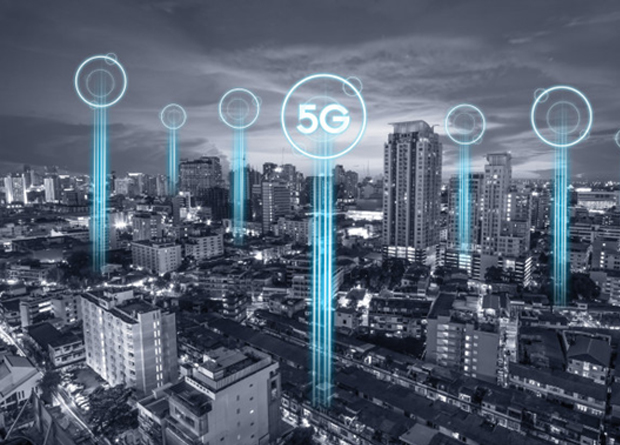
This rapid network expansion, however, was less of a journey into uncharted territory and more of an acceleration of trends that were already occurring. Now, with 5G entering the picture, additional security challenges are presenting themselves. Moreover, many do not realize how unprepared they may be for the additional changes coming down the pipeline.
The 5G that many companies are familiar with has low bandwidth and is generally under six gigahertz, a stark contrast to what is emerging on the scene – new smartphones can use 5G bandwidth at performance levels of 24 gigahertz and above. This will fundamentally change network performance requirements on the edge for both devices and applications; it will also require the appropriate security infrastructures to monitor and manage this new level of performance.
The new 5G is expected to power everything from manufacturing and energy grids to autonomous vehicles and consumer brands. Businesses that do not proactively prepare for this shift will start to encounter latency issues and severely diminished user experiences and will ultimately get left behind.
Tackling 5G Security
Demands on networks will increase significantly, particularly at the edge, and increased complexity will simultaneously lead to evolving security needs. But simply adding security on top of the network can create bottlenecks. The key is to find a way to increase network capabilities securely in a way that doesn’t impact the user experience.
Two approaches are on the table for addressing the challenges of 5G. The first approach is to deploy security at the 5G carrier level. The second requires focusing on edge security since the edge is where 5G is used either as a backup connection or, increasingly, as a primary connection. No matter the approach, the edge will require AI-predictive and ASIC-accelerated performance.
The cloud edge, in general, will require new levels of highly optimized security even if 5G isn’t considered a priority. Complex hybrid networks now span collections of clouds and data centers, requiring more virtual devices and firewalls to handle the load. And while 5G will make transactions and applications faster, it will also enable faster cyberattacks. Proper management requires extreme consistency in security policy and deployment strategy.
The Time to Prepare is Now with 5G
Today, 5G represents about $5 billion in operator-billed revenue opportunity. This is projected to grow to an astounding $357 billion by 2025, representing a significant shift in how and where 5G is used. Therefore, meeting the performance and security needs of 5G will be crucial to any company wishing to remain viable.
Many organizations do not currently have this capability. Moreover, previous strategies of chasing best-of-breed devices mean that many organizations have a legacy security setup made of a hypercomplex patchwork of increasingly difficult-to-manage infrastructures. Certainly, last-minute deployments in the wake of the pandemic did not help matters. Adding 5G on top of such architectures is likely to compound the issue and lead to a whole host of problems and vulnerabilities.
Workarounds are no longer the answer. Now is the time for organizations to deploy coherent and comprehensive 5G network security strategies. But they must act quickly as the needs of a 5G world will only grow from here, and 6G is less than a decade away.