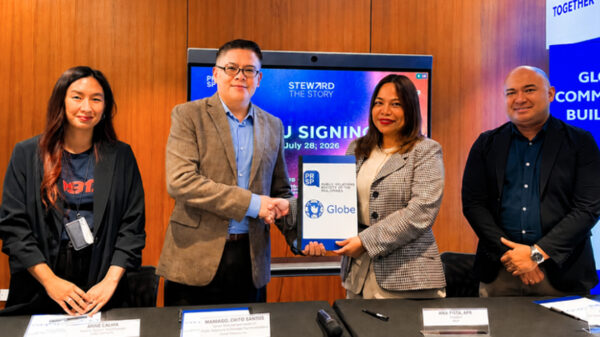
While government services and processes are better now compared to a decade ago because of information and communications technology (ICT), there still is plenty of room for improvement. An opportunity Globe Telecom intends to pursue with its eGovernment (eGov) unit.
Established nine months ago, the eGov unit intends to help the government provide fast and efficient services to citizens and support the objective of increasing national competitiveness.
According to Globe Senior Vice President Jesus Romero, Globe eGov was created as the company’s response to the call of government for private sector participation. He noted that the company never participated in government bids in the past. Today, with all the capabilities and resources in place, Romero said that Globe is now ready to provide first-class ICT facilities to a wide scope of government agencies centered on taxation, procurement, customs, manpower, statistics, business processing and transportation, among many others.
The eGov unit, Romero adds, will pursue projects that promote efficiency and facilitate ease of doing business. Other areas include public financial management, transparency, and revenue generation.
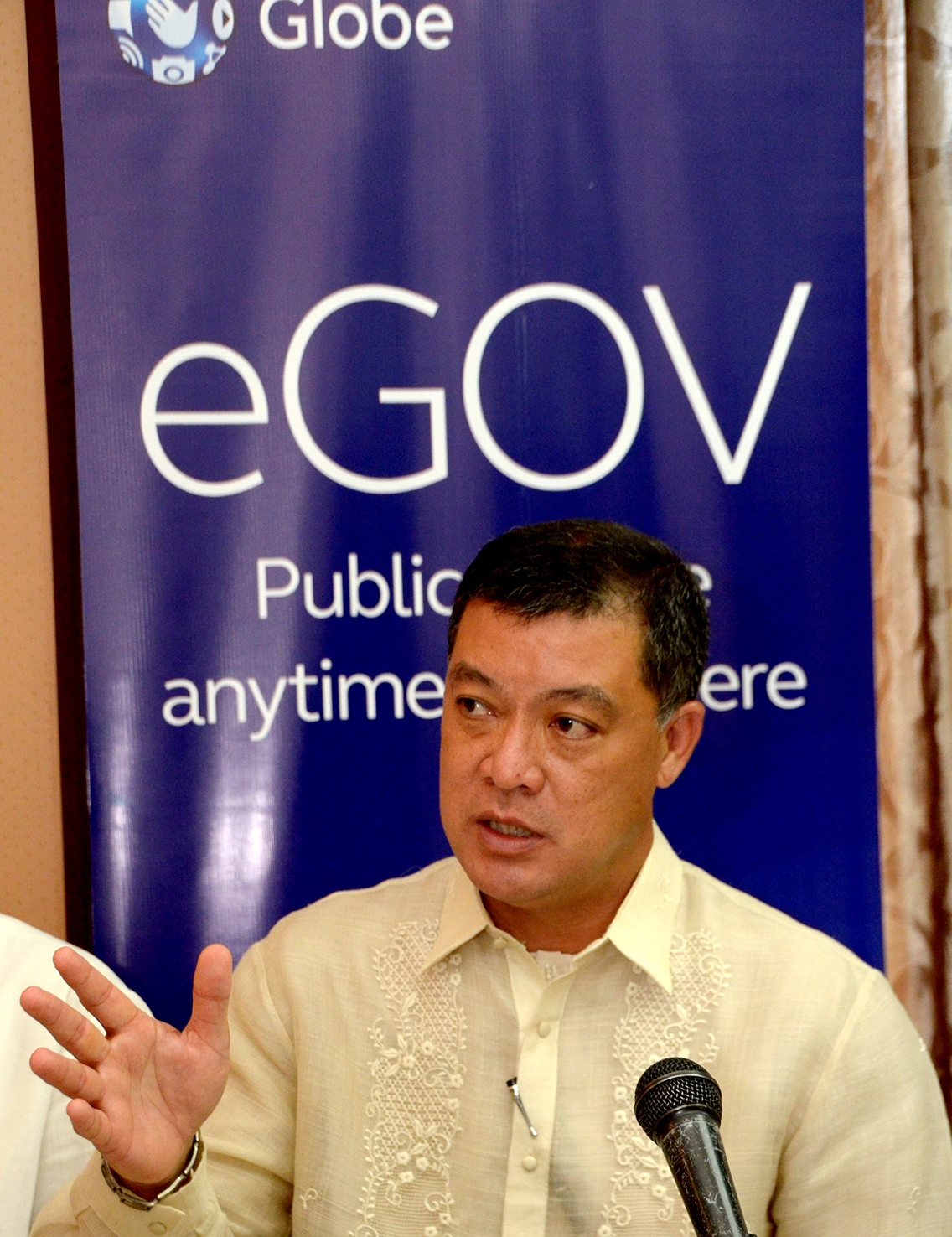
Jesus Romero, Globe Senior Vice President and eGov Head
Current project and future bids
The eGov unit’s first major project was the Php124-billion contract to modernize the Philippine Government Electronic Procurement System or PhilGEPS. Awarded to Globe last February, PhilGEPS is a project of the Department of Budget and Management (DBM) and Department of Finance.
PhilGEPS is an important government project designed to promote transparency and efficiency in the government procurement procedures in a central portal of all public procurement activities. This includes volume discounts in bulk purchasing of government needs.
Aside from PhilGEPS, Globe intends to bid for three other projects, namely the National Single Window project of the Bureau of Customs worth Php800-million; the Php2.1-billion Government Integrated Financial Management Information System project of the Department of Budget and Management; and the modernization of the Bureau of Internal Revenue’s (BIR) tax system with a budget of US$19 million that will be funded by the US government through its Millennium Challenge Account-Philippines.
Romero said they did not bid for the Php3.4-billion Land Transportation Office (LTO) project because they felt they could not fulfill the project’s timeline.
ICT Forum for LGUs
As a show of support for the government’s computerization efforts, the company sponsored the recent first-ever ICT Innovations Forum for LGUs (local government units) held at the Hotel Intercontinental.
“We are pleased to activate this groundbreaking ICT Forum which will serve as the venue to facilitate discussions between our local government officials and technology firms, ushering in the digitization of our LGUs. We believe that this will signal the start of the ‘digital era’ in the grassroots level.”
Various government luminaries led by Dept. of Trade and Industry USec Nora Terrado opened the series of talks, focusing on heightening the country’s overall competitiveness of the country’s LGUs by way of ICT, its role in efficient LGU operations, innovation for public service delivery, and the government-wide Medium-Term Information and Communication Technology Harmonization Initiative or MITHI.
Meanwhile, Development Bank of the Philippines’ Nilo Cruz, Bohol’s Romulo Tagaan and Project Noah’s Prof. Mahar Lagmay touched on the benefits of digital and electronic initiatives on payment, registry and disaster prevention, respectively. Local, regional and multinational technology companies also made their presence felt by disclosing their capabilities to help Philippine LGUs advance their use of ICT, such as the Telecom Asia Awards nominee for best cloud service PayrollCloud, Globe Charge and Google Apps for Business from Globe, as well as TV white space, disaster preparedness, response and recovery using the cloud, among many others.