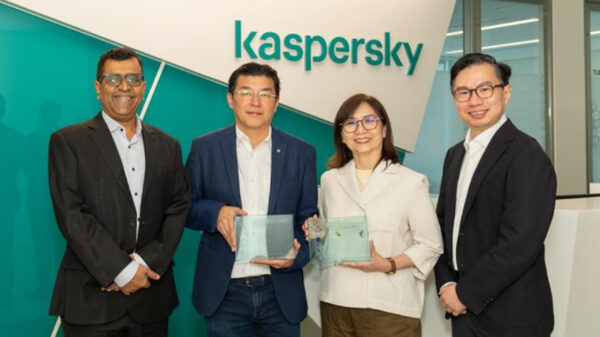
Global cybersecurity and digital company Kaspersky raised urgent concerns about the rising misuse of artificial intelligence (AI) in cyberattacks across Asia Pacific (APAC), revealing new threat data and defensive strategies at its Cyber Insights 2025 forum held in Seoul.
According to Kaspersky experts, 2024 saw over 3 billion malware attacks globally, with a daily average of 467,000 malicious files detected. Windows systems were most frequently targeted, and Trojan detections rose by 33% year-over-year.
Financial cybercrime also surged worldwide, with a 2x increase in mobile financial threat victims and escalating phishing attacks targeting cryptocurrencies. Misleading apps, including fake VPNs, also proliferated, as did threats against gamers and children. Alarmingly, 45% of passwords could be cracked in under a minute.
But beyond volume, the nature of threats is shifting with AI becoming a double-edged sword in cybersecurity.
“Cybercriminals are leveraging AI to create phishing content, develop malware, and even launch deepfake-based social engineering attacks,” said says Vladislav Tushkanov, Machine Learning Technology Research Group manager at Kaspersky. He warned of LLM-native vulnerabilities, AI supply chain attacks, and the growing problem of shadow AI, the unauthorized use of AI tools by employees that may leak sensitive data.
In one alarming example, Kaspersky researchers found malicious AI models hosted on public repositories, and corporate environments are now vulnerable to prompt injection, hallucination errors, and insecure account handling within generative AI systems.
Speakers at the event also addressed how next-gen SOCs (Security Operations Center) must evolve with AI integration for detection, response, and automation. Live demos featured Kaspersky’s own AI-enhanced tools for threat hunting and vulnerability management.
“AI is reshaping both the threat landscape and the defenses,” says Adrian Hia, Managing Director for Asia Pacific at Kaspersky. “To stay ahead, organizations need more than just tools, they need intelligent SOCs that combine automation, threat intelligence, and human expertise. That’s the foundation for resilient, AI-ready cybersecurity. At the end of the day, the winners in cybersecurity will be those who don’t just adopt AI, but secure it.”
Kaspersky urged companies to adopt AI-aware cybersecurity strategies, including:
- Security solutions to detect AI-powered malware and threats in the supply chain.
- Threat intelligence tools to monitor AI-driven exploits.
- Access controls and employee education to reduce risks from shadow AI and data leakage.
- Establishing a Security Operations Center (SOC) for real-time threat monitoring and rapid response.
A SOC is a centralized command center that monitors, detects, analyzes, and responds to security incidents within an organization’s network and systems. By investing in the right resources, technology, and people, you can enhance your security posture, mitigate risks, and protect sensitive data, safeguarding your reputation and business continuity in an increasingly complex threat landscape.
Based on Kaspersky’s experience in security operations and taking into account modern security best practices, the global cybersecurity company has developed a wide range of consulting services to help organizations establish your own SOC.