















































Connect with us

Hi, what are you looking for?

HEADLINES

Tech affecting traditional office environment, creating ‘office of the future’

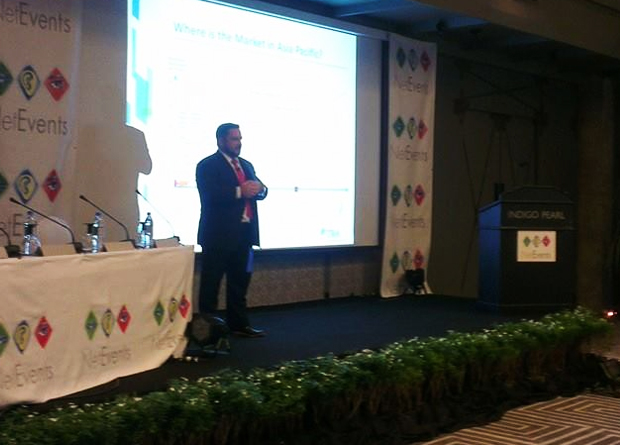
Tim Dillon, director of Tech Research Asia, spoke on the relevance of creating an intelligent workplace. Many companies continue to support traditional workplace environments, but “going mobile is here”, and many miss opportunities by not recognizing this, Dillon said.

Tim Dillon, director of Tech Research Asia, spoke on the relevance of creating an intelligent workplace. Many companies continue to support traditional workplace environments, but "going mobile is here", and many miss opportunities by not recognizing this, Dillon said.

Tim Dillon, director of Tech Research Asia, spoke on the relevance of creating an intelligent workplace. Many companies continue to support traditional workplace environments, but “going mobile is here”, and many miss opportunities by not recognizing this, Dillon said.

PHUKET, THAILAND – While many businesses still continue to be operated using traditional means, the effects of technology in changing office environments can not be denied. And for service providers to affect the decision-makers in the change that is happening, they need to be able to speak the language not only of IT people.

This was according to Tim Dillon, director of Tech Research Asia, who spoke on the relevance of creating what is being dubbed as an “intelligent workplace” here at the NetEvents Asia-Pacific Press and SP Summit 2014.

In 2013, Tech Research Asia surveyed 1,000 organizations in Asia and the Pacific (APAC), and it found that 59% of them still support having traditional office environments as their work style. However, going mobile as an alternative work style is gaining grounds. Already, 26.9% of the organizations support tele-working/remote working; 22.6% support mobile working while traveling; and 21.4% support mobile work outside of the office.

In the past, “support of traditional office environments was (higher),” Dillon said, “but going mobile is now (commonplace).”

Various technologies are impacting the shift from traditional to more tech-savvy workplaces, including cloud infrastructure and storage, cloud apps stores, security, data automation and process, hi-density Wi-Fi, and virtualization.

For Dillon, not focusing on this can be missed opportunity for businesses that fail to recognize the value of going mobile; though also for service providers that continue to only push a “technology-only pitch.”

Advertisement. Scroll to continue reading.

Particularly, “tech companies are not driving the discussion,” he said. “Instead, enterprise decisions are made at CEO level, with influence from FR, CFO, and so on.” As such, service providers need to be able to speak the language of these people, if they are to be persuaded to make the shift from traditional to more mobile work environments.


Advertisement
Advertisement
Advertisement

Like Us On Facebook

You May Also Like

HEADLINES

This milestone marks a significant step in Minor’s digital transformation strategy and commitment to elevating guest and associate experiences across its portfolio. The hotel...

HEADLINES

One of Beyond’s commitment in the Philippines is to develop its tech talent. The company announced it has plans to invest in upskilling Filipino...

HEADLINES

The new practice combines IBM’s deep industry expertise and IBM Consulting Advantage – the company’s AI-powered platform that helps IBM teams design, build and deploy...

HEADLINES

Unlike core IT teams, HR environments may not always be subject to the same level of hardened security controls. Yet, they often handle sensitive...

HEADLINES

By combining Saviynt’s Identity Governance & Administration (IGA), Privileged Access Management (PAM) solutions, and Identity Security Posture Management (ISPM), and Exclusive Networks’ extensive regional footprint, organisations will gain faster access...

HEADLINES

Critical infrastructure all over the world is under threat from highly organized, state-sponsored “espionage ecosystems”. These loosely knit but well-resourced organizations are deploying a...

HEADLINES

As cyber threats become more sophisticated, cloud and application security can no longer be treated as a compliance exercise. It must be seen as...

HEADLINES

A zero-trust secure connection has many applications beyond automotive. It’s really for any industry that cares about security, and managing that security at scale.

Advertisement