Amid the continuing digital shift, organizations demand a more secure, accurate, and reliable identity authentication methods for data access, as well as general security, especially with the rise of threats and risks in the cyberspace.
In the Philippines, the Department of Information and Communications Technology (DICT) revealed that the country is among the top 10 nations vulnerable to cyberattacks, based on the reports of cybersecurity experts.
According to Raul “Cricket” Santiago III, CEO and president of Fujitsu Philippines, these threats turn system’s security a challenge for organizations with the increase in attacks on all fronts—not only externally by outsiders but also, internally through insider manipulation. While technological safeguards can now be implemented, the continued increase in networks, devices, connections, and applications offered by solutions providers makes system’s security even more complex.”
For many organizations, biometric security can provide the security they need. With its flexibility and efficiency, this technology is also capable of serving and supporting all industries. It has also paved way to a number of biometric solutions, ranging from eye, face, and fingerprints, to signature and voice recognition, which all offer greater levels of security than traditional passwords.
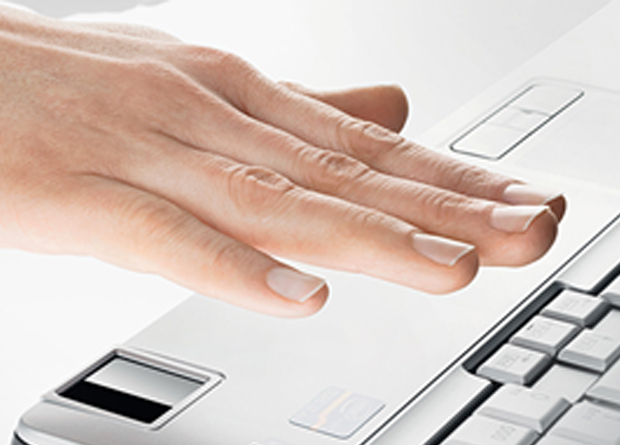
This time, Fujitsu reinvents the way biometrics authentication works as it introduces PalmSecure, a leading-edge technology that utilizes biometric technology to authenticate a user’s identity, based on palm vein patterns. Since veins are internal and have plenty of differentiating features, attempts to forge an identity are extremely difficult, as the sensor of the palm vein device will only recognize the pattern if deoxidized hemoglobin is actively flowing within the individual’s veins.
Fujitsu’s PalmSecure has an advanced authentication algorithm produces higher levels of accuracy and application versatility. It has a false acceptance rate under 0.00001% when the false rejection rate is 0.01 percent (with one retry), which makes it one of the most accurate biometric authentication system currently available on the market.
In terms of accuracy, Fujitsu assured that the initial user enrollment can be completed in under 10 seconds. In addition, contactless authentication is hygienic and non-invasive which promotes a high-level of user acceptance.
Based on Fujitsu’s two decades of image recognition experience, PalmSecure is developed to cater to a wide range of applications across all industry sectors. Through PalmSecure sensors, the technology can be utilized for time and attendance, which in turn, can reduce employee fraud. It can also remove the pressure of password resets when used in securing the access of enterprise-wide IT systems, as well as improve a building’s security when utilized for physical access control of office visitors and staff.
Among the other security system tools include PalmSecure ID used for single or multi-factor that combines palm vein pattern recognition with ID cards and badges; PalmSecure PSN900, an advanced biometric authentication that can be easily integrated into existing infrastructures; as well as Tablet STYLISTIC V535, an authentication tool with integrated palm vein sensor.
Fujitsu also has PalmSecure SDK, a software development kit (SDK), which helps organizations develop solutions and products that use the PalmSecure sensor to tackle their unique security system requirements.