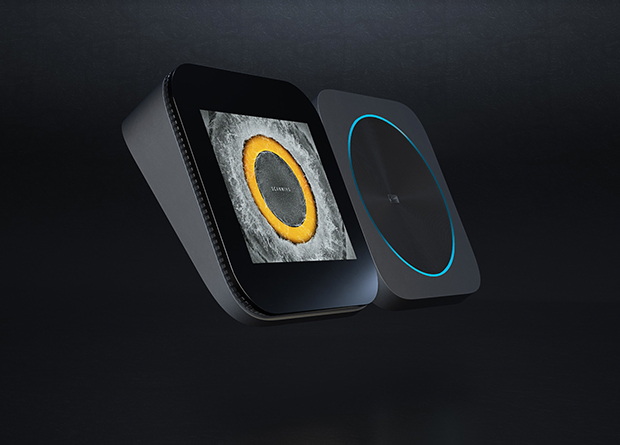
Symantec Corp. introduced Industrial ControlSystem Protection (ICSP) Neural, the industry’s first neural network-integratedUSB scanning station that helps organizations protect infrastructure by preventing the physical consequences of cyber-attacks on operational technology (OT).
OT is mission-critical in industries such as energy, oil and gas, manufacturing, and transportation, but legacy systems are often outdated and nearly impossible to secure with traditional endpoint security. Companies have typically relied on unscanned USB devices to update these systems, increasing the potential for malware infection and targeted attacks.
The threat of cyber warfare – including physical damage and personal safety – is very real and the consequences are potentially devastating. Despite this, the industrial control systems that power critical infrastructure often run on outdated Windows systems leaving them vulnerable to both known and unknown threats. For example, the Symantec-discovered Stuxnet worm used USB-based malware to manipulate centrifuges in Iranian nuclear plants – ultimately sabotaging a key part of the country’s nuclear program. To help combat this type of threat, the US government elevated its Cyber Command to a full combatant command in May 2018.
Symantec ICSP Neural utilizes artificial intelligence to prevent known and unknown attacks on IoT and OT environments by detecting and providing protection against malware on USB devices. ICSP Neural stations scan, detect USB-borne malware, and sanitize the devices. Existing ICSP deployments have shown that up to 50 percent of scanned USB devices are infected with malware.
“USB devices are given away at events, shared between co-workers, and reused again and again for business and personal use, introducing the risk of accidental or malicious infection. The impact of connecting an infected device to a critical system can be devastating,” said Patrick Gardner, senior vice president, advanced threat protection and email security, Symantec. “Behind the scenes, ICSP Neural will retrofit existing infrastructure with a central nervous system to provide protection for critical infrastructure. On the frontend, an aluminum design embodies a simple user experience that highlights potential threats.”
Simplifying the scanning process is critical to overall security hygiene, as operational technology environments are often in remote areas or field operations, far removed from an organization’s IT teams. As such, the ICSP Neural scanning process is simple, requiring no specific security or IT training. Once connected, ICSP Neural emits visualizations and real-time signals through the LED light ring that indicate when malware has been detected and sanitized.
The Symantec-designed neural engine harnesses the power of Symantec’s world-class threat intelligence network to increase detection efficacy by up to 15 percent. It also detects adversarial machine learning attempts and initiates self-learning to provide protection against unknown threats. The AI-powered technology can learn in real-time, leading to sustained efficacy with limited internet connectivity – up to twice as long. These artificial intelligence and organic self-adaption capabilities can protect organizations against emerging and future attacks. The neural engine enables high-intensity detection with near-zero false positives (as low as one hundredth of a percent).These capabilities are accomplished using just a tenth of the bandwidth of other similar solutions – an indispensable feature for systems using VSAT connections.
ICSP Neural supports a full range of OT andIoT devices and systems. The optional enforcement process prevents use of unscannedUSBs with less than a 5MB installation footprint and can be deployed on operating systems from Windows XP to Windows 10 (Linux support is planned in 2019).
As part of the Integrated Cyber Defense strategy, ICSP Neural complements the latest version of Symantec’s CriticalSystem Protection (CSP) software; a flexible and compact behavioral security engine built with application whitelisting, infused with anti-exploits for managed or standalone devices. CSP 8.0 provides a no-internet, policy-based approach to endpoint security, securing devices from known and unknown zero-day exploits and attacks, even on legacy operating systems.
Symantec’s ICSP Neural is available for pre-order now and is expected to ship in early 2019.