When relationships blossom, individual digital lives become blurred and online boundaries compromised, which can endanger our personal privacy. According to a global research from Kaspersky Lab and Toluna, despite an overwhelming majority of people saying that their relationships are more important to them than their privacy, unhappy partnerships can fuel privacy fears, and overstepping boundaries can often lead to arguments.
The research found that eight in ten (80%) people believe that couples should have private space, both on and offline, and 70% of people value their relationships more than their privacy. Half of partners openly share their device PINs and passwords with each other, and a quarter of people have their fingerprint on their partners’ devices.
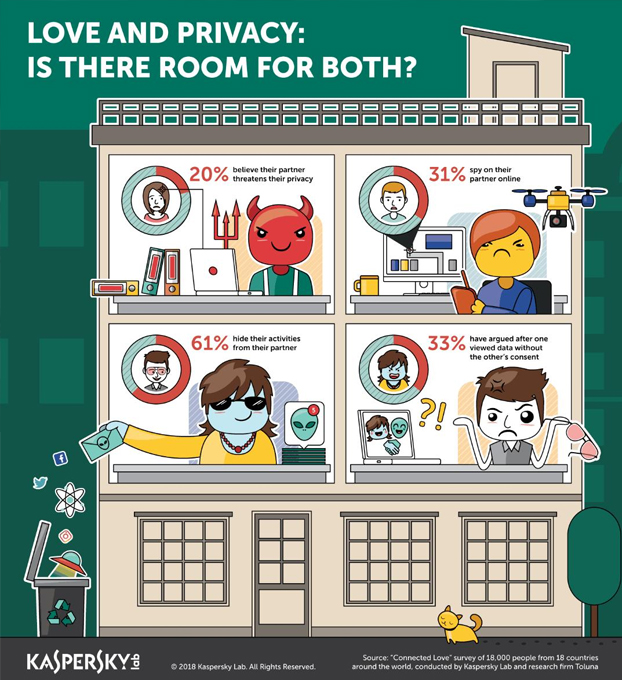
Every third Internet user surveyed admits spying on their partner online to see what they get up to, and this figure rises to almost half among those who describe their relationships as unstable or unsure if they have a future. Unhappy partners are also more likely to feel that their privacy is endangered by their partner (31% agree) compared to those in a happy relationship (15% agree).
Unhappy partners are more inclined to want to keep some of their activities to themselves (76% compared to 54% for those in a happy relationship). The top things to hide include the content of messages they send to other people, how they spend their money, some of their personal files and websites they have visited.
The issue of privacy and secrecy surrounding online activities might also lead to partners quarreling – a third (33%) have argued after a partner viewed something which the other didn’t want to share.
“When relationships form, online privacy borders are called into question, along with just how much people are prepared for their partner to know and access about their online life. With so many partners using each other’s devices or snooping on their loved ones, privacy boundaries can go out of the window. This can thwart any Valentine’s Day or birthday surprises and prevent people from keeping things secret from their partner,” said Andrei Mochola, head of consumer business at Kaspersky Lab. “It is important to get the balance right between a transparent, honest relationship and keeping your digital life secure. An open dialogue with your partner and setting privacy boundaries is a good starting point, which can be supported by privacy features in Kaspersky Lab products.”
To keep secrets safe, the File Shredder feature in Kaspersky Total Security permanently deletes files to ensure they can’t be restored. The Privacy Protection feature can hide messages and calls on an Android device, and to keep website visits from prying eyes, the Privacy Cleaner clears browsing history and removes all trace of activity on the Windows system.
The Private Browsing feature blocks website tracking and any attempts at data collection, stopping related adverts popping up and helping keep Valentines gifts and plans well under wraps from a prying partner. There is also no substitute for strong passwords across accounts, especially if there is need to share them with a partner – as this increases the risk of them falling into the wrong hands. Kaspersky Password Manager helps to not only generate strong passwords but keep them safe and accounts secure.