















































































While researching the latest activities of the infamous cybercrime group Lazarus, Kaspersky Lab has uncovered a number of compromised servers being used as part of the threat actor’s global command and control infrastructure. The hacked servers are located around the world, including in the Asia Pacific region.
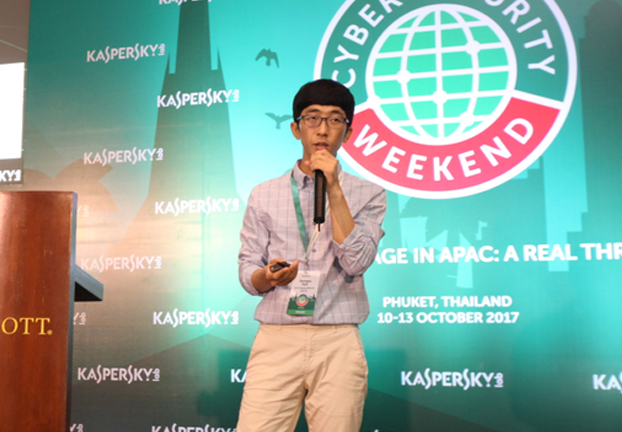
Kaspersky Lab senior security researcher Seongsu Park details the technique used by Lazarus in breaching into command and control servers of companies around the world, including those in the Asia Pacific region.
The compromised servers, found in Indonesia, India, Bangladesh, Malaysia, Vietnam, South Korea, Taiwan and Thailand, among others, could be used by Lazarus to launch targeted attacks against a company or organization.
The researchers discovered that the servers had been infected using malware called Manuscrypt, a family the threat actor is known to have used since 2013. They believe that the Manuscrypt malware was installed using an exploit for CVE-2017-7269, a vulnerability in Microsoft Internet Information Services (IIS) 6.0 that was patched by Microsoft on June 13, 2017.
Many servers worldwide remain at risk of this exploit. According to open source intelligence, three of the top five countries that still have servers carrying this vulnerability are in the APAC region: China (with 7,848), India (1,524), and Hong Kong (1,102). The U.S. tops the list with the most vulnerable servers (11,949), while United Kingdom ranks 5th with 805.
If the exploit is successful, the malware can hand control of the compromised host to the attacker and easily implant additional malware on the server. Kaspersky Lab researchers have also found several tools on the servers, including an information harvester. Using this kind of information gathering tool, the attacker can steal information from the victim’s own infrastructure.
Lazarus is believed to be behind massive and high-profile attacks like the 2014 hack of Sony Pictures, the million-dollar Bangladesh Bank heist in 2016, and the recent WannaCry destructive ransomware epidemic. The Korean language group is thought to be state-sponsored.
“Companies are increasingly worried about being hit by advanced targeted attack groups like Lazarus. Unbeknown to them, their own corporate servers could be infected and manipulated by the hackers against them, or used to launch attacks on others,” says Seongsu Park, senior security researcher at Kaspersky Lab’s Global Research and Analysis Team (GReAT).
Park predicts that with these incidents targeting enterprise networks, IT security priorities and processes will need to adapt as customers will require technology that is combined with intelligence and expertise, to protect them from both known and unknown threats.
In order to prevent falling victim to such an attack, Kaspersky Lab researchers recommend implementing the following measures:
- Install a robust security solution as part of a comprehensive, multi-layered approach to IT infrastructure security
- Enforce the use of strong passwords as part of the server authentication process
- Implement a continuous process of patch management
- Undertake a regular security audit of the IT infrastructure
- Consider investing in threat intelligence services which will keep the organization informed of emerging threats and offer an insight into the criminal perspective to help them assess their level of risk.