




















































































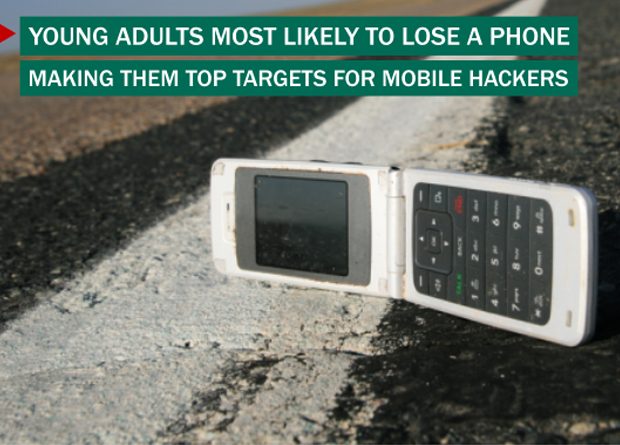
In the past year, over one-in-four young Internet users have lost their devices (17%) or had their devices stolen (13%), with a third losing access to their online accounts, or suffering from a loss of data privacy as a result. According to the research from Kaspersky Lab and B2B International, young users lose devices more frequently than older adults.
“Mobile devices have become central to our lives. They are like friends that we carry everywhere with us. Most of us store sensitive and personal information on them, whether that is pictures of our family, online banking details, personal email messages or passwords to access our daily lives. Yet, it is easy for our devices, when lost or stolen to become digital frenemies,” said Evgeny Guryanov, product manager at Kaspersky Lab.
While one-in-seven users (14%) overall has experienced the loss or theft of a device, this figure rises to 26% among users under the age of 24. Of the 16 to 24 year olds affected, 83% say they suffered negative consequences afterwards, slightly higher than the overall average of 77%.
A third (32%) of 16-24 year olds have had their online accounts hacked as a result (compared to 27% on average). One-in-four has suffered the permanent loss of precious personal images and videos (25%), along with the leaking of personal and sensitive information (24%).
A fifth of users overall were disciplined at work after having their device lost or stolen, because the device in question contained business data (22%). In addition, a fifth noticed that financial details stored on the device had been misused (21%).
When affected by loss or theft, to protect themselves, only four-in-ten blocked the device through their mobile operator or reported the incident to the police, and only 29% remotely wiped the device or tried to track it down using ‘find my device’ software (15%).



























