




































































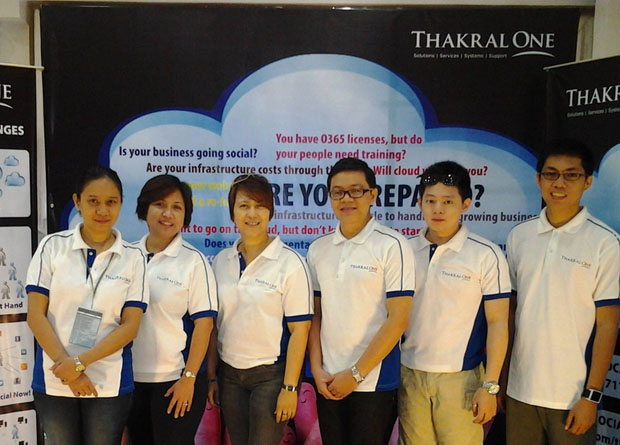











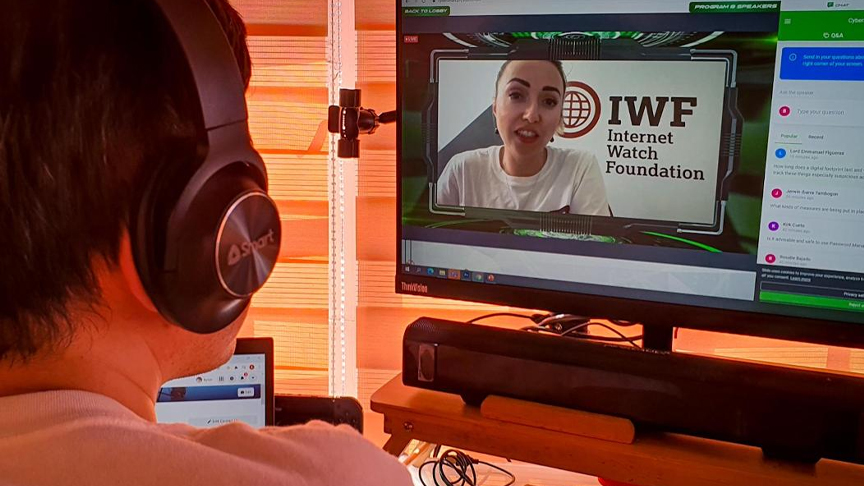
To cap the Cybersecurity Awareness Month, PLDT and Smart held back-to-back bootcamps of the CyberSmart online caravan for local government units, Department of Education (DepEd) personnel and the public, to equip them with knowledge and skills on data protection.
“As PLDT and Smart embrace the mission to provide digital innovations that empower Filipinos to live smarter for a better world, we are likewise committed to help you fortify your cyber defenses and ward off cyber attacks,” said Alex O. Caeg, Senior Vice-President & Head of Consumer Sales Group at PLDT and Smart.
Kristian Pagurayan, Awareness, Training and User Adoption Supervisor of the Cybersecurity Operations Group at PLDT and Smart, shared tips on how to spot phishing schemes, one of the most common strategies employed by hackers to steal information. Think of it as the digital version of the 90’s “budol-budol” modus.
Hackers may use different platforms to lure netizens but a lot of them follow a template which can be summarized by the acronym “FALSE”.
File Attachment
The rule of thumb is not to open unknown file attachments which may contain viruses or malwares.
Attention Grabbing Offers
Hackers often dangle “too good to be true” offers. These could come as huge discounts, expensive devices, or winning the grand prize of a raffle that you don’t remember joining.
Links
Pagurayan suggests hovering your mouse over hyperlinks to see the web destination. If the URL looks suspicious, don’t click it.
Sender is unknown
If you don’t know the sender, do not to open the email.
Element of Time
Don’t be fooled by limited offers. Cyber criminals often use to urge you to take advantage of the so-called promo.
Pagurayan also shared tips on how to spot malicious websites. He said a simple way to check if the website is secure is to look for “https://” or the “hypertext transfer protocol secure” in the address bar.
“This means that the website you are visiting is encrypted. Activities on secure websites are invisible or inaccessible to fraudsters,” explained Pagurayan.
He added that fake websites often contain poor grammar and misspelled words. Low resolution images are also a red flag. If in doubt, you can always run the website through a website checker to check if it’s malicious or not.
Pagurayan also warned recruits of social media trends like Facebook color changer, who viewed your profile picture, anniversary celebration. He said, these apps often ask for your personal details, the same details that you use to answer security questions.
“With the world relying on the internet, criminals are also prowling in the shadows waiting to pounce on unsuspecting victims. The vulnerable person is just one click away from having their bank accounts or identities stolen,” reminded Stephanie Orlino, Smart Assistant Vice President and Head for Community Relations.
This year, more than 28,000 participants took part in the six legs of the CyberSmart online caravan. Working with UNICEF, International Justice Mission (IJM), Internet Watch Foundation (IWF), Google, University of the Philippines Open University, Kids for Kids, Youth for Mental Health Coalition, Mindanao Gold Star Daily, InnoPub Media, Tech Sabado, and UnboxPH, the CyberSmart online caravan aims to raise a generation of cyber warriors who can identify online threats and integrate cybersecurity in their everyday lives. The 2021 edition is also a collaboration between various business units across PLDT and Smart and supported by the Department of Education and the National Privacy Commission.
PLDT and Smart enable learning communities through technology as part of its commitment to help the nation achieve the United Nation’s Sustainable Development Goal (SDG) #4: Inclusive Quality Education.