
Apple is commemorating Data Privacy Day by sharing “A Day in the Life of Your Data,” an easy-to-understand report illustrating how companies track user data across websites and apps. The report also shares how privacy features across Apple’s products give users more transparency and control, empowering people with the tools and knowledge to protect their personal information, from what they do, where they do things, who they engage with, nutrition label, and so on .
“Privacy means peace of mind, it means security, and it means you are in the driver’s seat when it comes to your own data,” said Craig Federighi, Apple’s senior vice president of Software Engineering. “Our goal is to create technology that keeps people’s information safe and protected. We believe privacy is a fundamental human right, and our teams work every day to embed it in everything we make.”
“A Day in the Life of Your Data” helps users better understand how third-party companies track their information across apps and websites, while describing the tools Apple provides to make tracking more transparent and give users more control. The explainer sheds light on how widespread some of these practices have become.
On average, apps include six “trackers” from other companies, which have the sole purpose of collecting and tracking people and their personal information. Data collected by these trackers is pieced together, shared, aggregated, and monetized, fueling an industry valued at $227 billion per year.
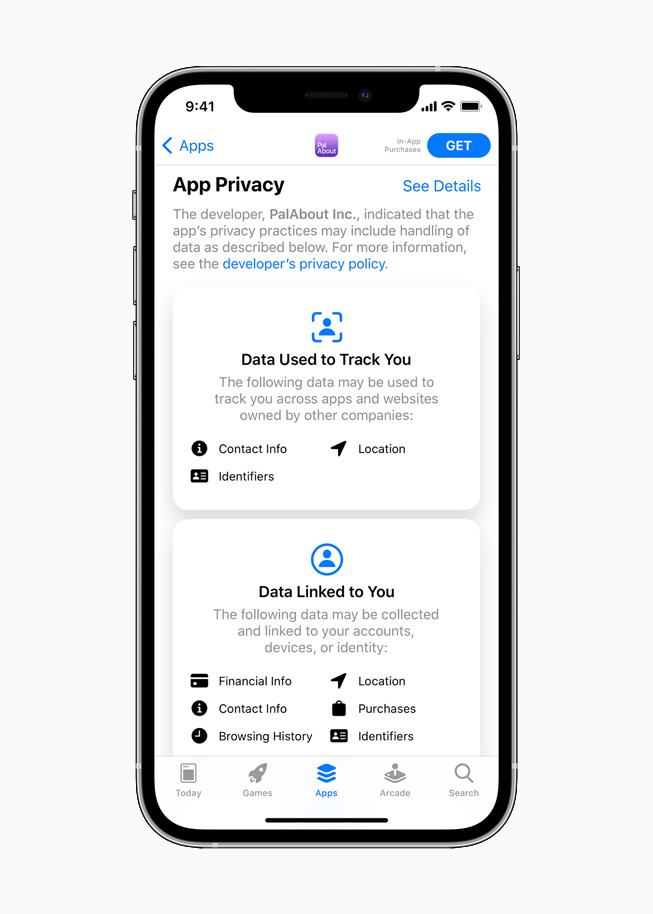
Last year, as part of iOS 14 and iPadOS 14, Apple launched a number of important privacy features intended to help users make more informed decisions about their data.
Two in particular have the potential to make a big difference in helping users protect their privacy:
- With the new privacy information section on App Store product pages, a feature called the privacy nutrition label, Apple is requiring every app — including its own — to give users an easy-to-view summary of the developer’s privacy practices. Every product page on the App Store includes standardized, easy-to-read information based on the developer’s self-reported data practices. The privacy nutrition labels give users key information about how an app uses their data — including whether the data is used to track them, linked to them, or not linked to them.
- And starting soon, with Apple’s next beta update, App Tracking Transparency will require apps to get the user’s permission before tracking their data across apps or websites owned by other companies. Under Settings, users will be able to see which apps have requested permission to track, and make changes as they see fit. This requirement will roll out broadly in early spring with an upcoming release of iOS 14, iPadOS 14, and tvOS 14, and has already garnered support from privacy advocates around the world.
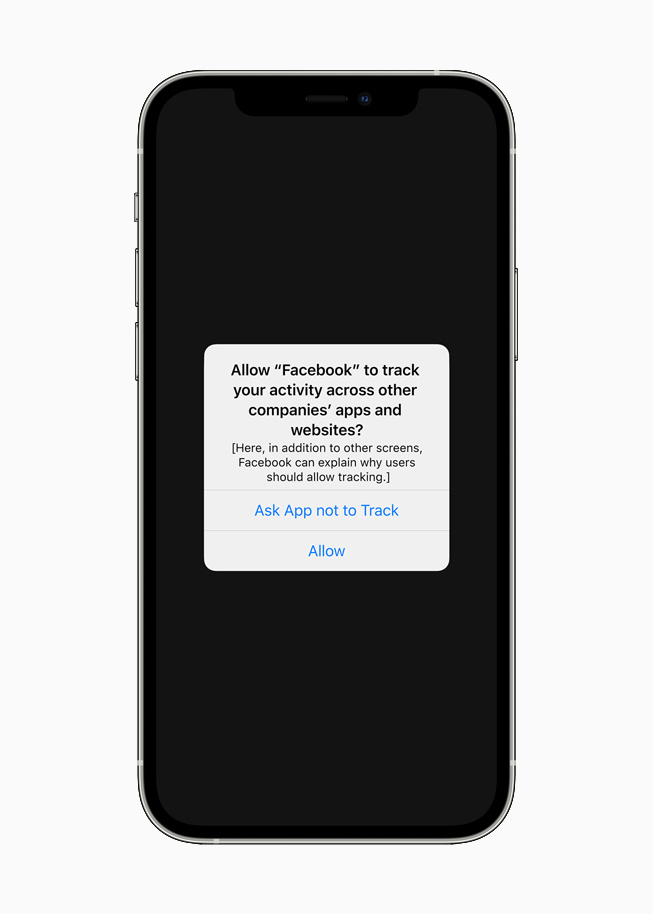
Awareness of industry practices like data tracking is only the first step toward a better privacy experience. Users also need the features and controls to decide how their data is used, and by whom.
Apple has led the industry by building privacy protections into every one of its products and services.For years, Apple has introduced dozens of technologies that safeguard user privacy and help keep users’ data safe. For example, Safari was the first browser to block third-party cookies by default as far back as 2005.
In iOS 11 and macOS High Sierra, Safari added Intelligent Tracking Prevention to further limit tracking while still enabling websites to function normally. In 2018, Apple introduced protections to prevent companies from fingerprinting Mac — a practice in which third parties try to identify users devices based on data like fonts and plug-ins.
These technologies represent only a small selection of the many privacy features and controls Apple has introduced across its products.