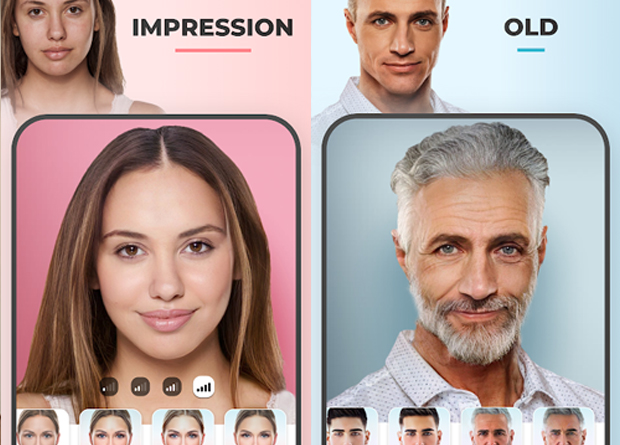
The FaceApp application has started to circulate again on social networks after the free launch of the “gender swap” filter. The new craze has generated the hashtag “faceappchallenge” and received hundreds of thousands of shares on Facebook and Instagram. As a result, concerns about the security of the facial recognition application and the risks of sharing this information for privacy reasons have also been raised.
“Being isolated and stuck at home during the pandemic has prompted people to spend more time on social media than ever before. Keeping themselves updated with news and connecting with friends and families are among the top reasons. But people have also been turning to social media to deal with stress and anxiety. Sharing photos and videos using apps that add filters either by swapping genders and looking older are now back in vogue. Again, we say there’s no harm in using these apps. But we urge social media users to pay strict attention to how much of their private information will be used and shared by such apps to avoid any risk”, said Yeo Siang Tiong, General Manager for Southeast Asia at Kaspersky.
Fabio Assolini, senior security analyst at Kaspersky, assures that the application does not contain any malicious elements. However, since facial recognition is a technology used mainly for password authentication, the user must be very careful when sharing their image with third parties.
“We have to treat these new forms of authentication as passwords, as any widely available facial recognition system can end up being used for both good and bad,” warns the Kaspersky expert.
According to Assolini, companies that own such apps could potentially facilitate or sell these images to entities that use Artificial Intelligence to make facial recognition modifications. “In addition, it must be taken into account that this data is stored on third-party servers, and that it can also be stolen by cyber criminals and used to impersonate identities,” he adds.
Therefore, the analyst recommends that before joining the latest social media challenge, users should be aware of the security of the app and download it only from official stores. He also highlights the importance of reading the privacy terms of the applications to understand what rights and types of access are being requested.
When downloading applications, Kaspersky recommends that users take the following precautions:
- Make sure the app is reliable and is downloaded from official websites
- Read the privacy terms to understand what information is being requested
- Treat facial recognition like a password – don’t use it everywhere
- Always check the permissions being requested, such as the login associated with an existing account in a certain social network.