The Philippine Genome Center (PGC) of the University of the Philippines officially opened its Core Facility for Bioinformatics (CFB) to provide local scientists and researchers a suite of services for genome-scale data generation and analysis.
The bioinformatics unit aptly complements the next generation sequencing services being offered by the Center’s DNA Sequencing Core Facility (DSCF). It offers high-performance computing resources, hardware and software, needed to efficiently analyze, manage/curate, and archive massive amount of data derived from next generation sequencing.
Apart from data storage and analytics, researchers working with genomics-based technologies may also avail of the CFB’s custom-made/client-focused services such as provision of software, specialized databases or technical support for varied bioinformatics analyses, and also the use and access to the high-performance computing resources.
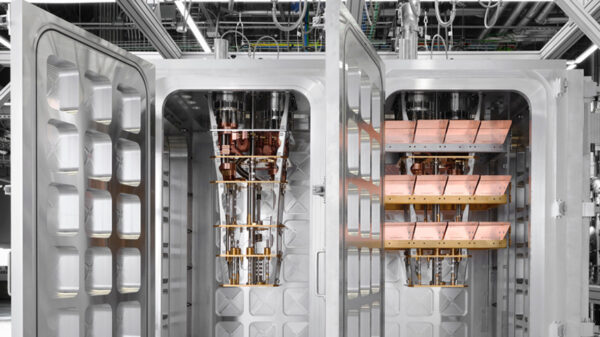
“The Philippine Genome Center will always be grateful to the administration of the Department of Science and Technology and the University of the Philippines for their unified support. The Core Facility for Bioinformatics, a part of the research project ‘capability building in R&D genomics’ is now open to local researchers through the grant from the Philippine Council for Industry, Energy and Emerging Technology Research and Development (PCIEERD). Credit is also due to the management of IBM for the IBM Blue Gene/P super computer which amplifies the data-storage capacity of CFB” said Dr. Carmencita D. Padilla, executive director of the Philippine Genome Center.
“In 2012, IBM had the privilege to team up with the Department of Science and Technology (DOST) to establish the first Philippine Systems and Technology R&D Lab. The R&D Lab has been applying IBM’s advanced analytics, high performance computing, and other best practices to evolve comprehensive solution sets to the most pressing challenges faced by Philippine society. As part of this initiative, the DOST also received an IBM Blue Gene/P super computer for use in research and development projects aligned with the Philippines’ national agenda, which leverages analytics, improving our weather forecasts, disaster management, precision agriculture, and health,” said Mariels Almeda Winhoffer, President and Country General Manager, IBM Philippines.
“The IBM Blue Gene, a supercomputer designed specifically for biological research found its way to the Philippine Genome Center, to power various research projects in bioinformatics, gene sequencing, health, biodiversity, forensics, ethnicity, and ethics – all geared towards helping improve the quality of lives in the Philippines and around the world.”
Foreseen as a catalyst in the advancement of bioinformatics and computational genomics research in the country, the CFB is also designed to contribute in addressing the lack of local experts in bioinformatics/computational biology.
Eventually, it will offer educational workshops, trainings, and seminars to fill in the talent gap in genomics and biotechnology in the Philippines.
Researchers in the academe, government and private institutions who recognize the value of genomics-based applications in health and medicine, agriculture, biodiversity and forensics are welcome to explore collaboration opportunities with the Center.
The Philippine Genome Center is a multidisciplinary institution that combines basic and applied research for the development of health diagnostics, therapeutics, DNA forensics and preventive products, and improved crop, aquaculture and animal varieties. The Center was established to facilitate the translation of knowledge in genomics into applications beneficial to society.
It is currently based at the 2nd floor of the National Institute of Molecular Biology and Biotechnology (NIMBB) Building inside the National Science Complex, University of the Philippines, Diliman, Quezon City.