Artificial Intelligence (AI) is shifting from pilot projects to core operations in the Philippines, with businesses and organizations now urged to embed AI directly into workflows, products, and decision-making as adoption accelerates at an unprecedented pace.
Adoption is moving fast. The Philippines ranks among the Top 15 countries globally for ChatGPT users and is reported to have one of the highest adoption rates in Asia.
During a recent media briefing, representatives from Thinking Machines and OpenAI emphasized that AI is no longer just an emerging tool but is becoming a primary driver of business transformation and competitiveness in the country.
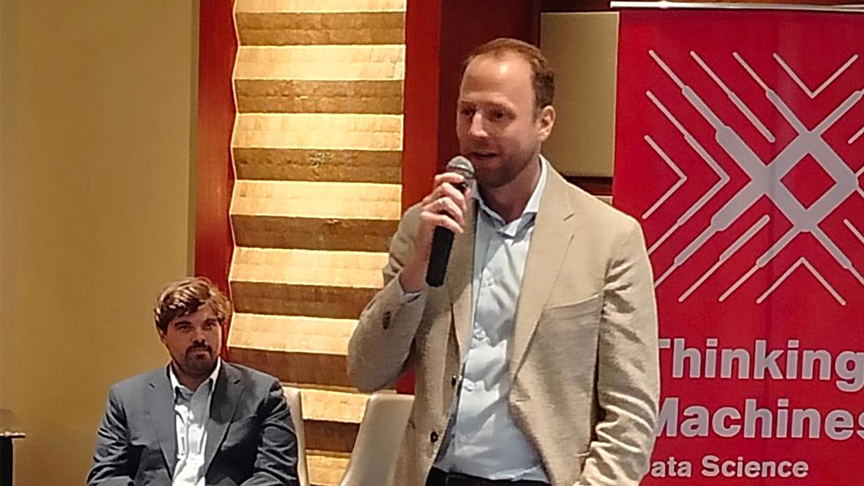
Niek van Veen, vice president for growth at Thinking Machines, said, “We see our role as being a transformation partner to help organizations – from enterprise businesses to the academic community – make the transition and leverage AI as a core capability within their organizations.”
They stressed that companies should move past simply using AI tools like ChatGPT and start rethinking how work itself is performed.
Mark Jeffrey, director of partnerships for SEA & Taiwan at OpenAI, said, “Organizations in every sector are asking us how they can move beyond individual uses and isolated experiments towards AI that actually improves how the business operates. We’re proud that more than two million businesses are building with OpenAI – double the number from just last year.”
Thinking Machines also shared its experience driving digital transformation locally, and highlighting the need to develop practical, value-creating AI solutions tailored to Philippine businesses.
OpenAI also underscored its mission to ensure artificial general intelligence benefits humanity. The organization pointed to two priorities: advancing AI through research and ensuring responsible deployment in real-world applications.
OpenAI noted its growing presence in Southeast Asia and its partnership with Thinking Machines to bring AI capabilities to local industries and businesses.
The Philippines presents significant opportunities for AI adoption. The accessibility of tools such as ChatGPT has allowed both individuals and small and medium enterprises (SMEs) to quickly identify practical applications without heavy technical investment.
The speed of AI development is also forcing companies to adapt faster. With shorter intervals between major model releases, businesses must continuously learn and adjust to stay competitive.
Veen noted that before, tools like ChatGPT were mainly used by individuals for personal productivity. Now, there are skills, agents, and agentic s ystems that move beyond the individual, to an organization-wide capability.
Jeffrey added that AI’s impact on business could exceed that of previous major technologies such as computers and the Internet.
With these opportunities, local businesses, particularly SMEs, are encouraged to adopt and explore AI applications early and responsibly to improve productivity, innovation, and competitiveness.