Amid volatile fuel prices and worsening traffic congestion, many drivers in Metro Manila say the biggest challenge in ride-hailing today is no longer simply finding passengers, but figuring out how to keep operating profitably in an increasingly pressured market.
An increasing number of drivers and transport operators in Metro Manila say maintaining gasoline-powered vehicles for transport services is becoming significantly more difficult amid prolonged congestion, volatile fuel prices and shrinking profit margins.
What was once considered a manageable operating expense is gradually becoming one of the mobility sector’s biggest structural challenges in the Philippines.
The Philippines remains one of Southeast Asia’s most oil-import-dependent economies, making the transport sector particularly vulnerable to fluctuations in global energy prices. According to data from the Philippine Statistics Authority (PSA), transportation costs have consistently ranked among the major contributors to inflation, particularly during periods of sharp fuel price increases. Fuel hikes have also repeatedly triggered pushback from taxi and jeepney groups as drivers struggle with declining real incomes.
For app-based drivers, the pressure is even more pronounced because most operating expenses are absorbed individually.
Unlike traditional taxi fleets, the Philippine ride-hailing market depends heavily on privately operated gasoline vehicles. That means every fluctuation in fuel prices directly affects drivers’ daily earnings, while fare increases remain difficult due to competition between platforms and broader market pressure to keep prices affordable.
“When operating costs become unstable, the driver becomes the shock absorber of the system,” said Rene E. Santiago, a Philippine transport economist and infrastructure consultant. “That becomes even more difficult in cities where congestion already reduces operational efficiency.”
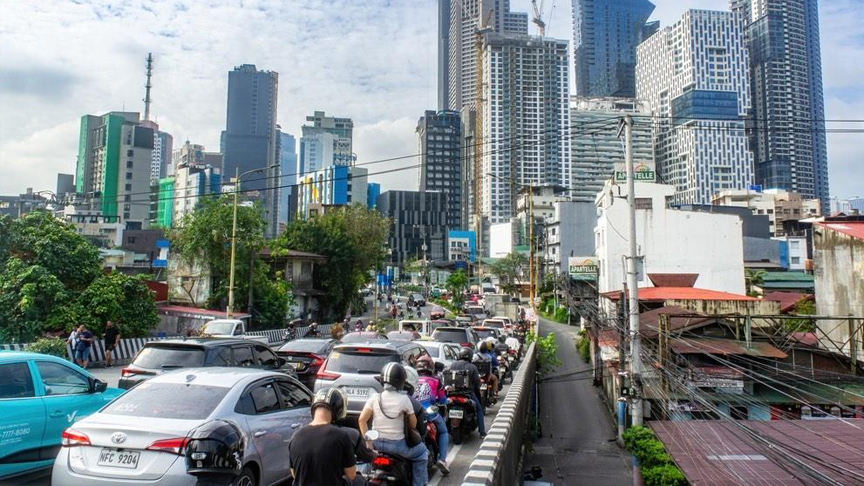
Metro Manila’s traffic conditions make the situation significantly more complex. According to Japan International Cooperation Agency (JICA), traffic congestion in the Philippine capital has historically cost the economy billions of pesos per day through lost productivity and transport inefficiencies.
For drivers operating gasoline-powered vehicles, that often translates into longer idle hours, continued fuel consumption and fewer completed trips across an entire shift.
“There are days when I spend almost half my shift barely moving in traffic,” said Paolo, an app-based driver in Quezon City. “Fuel keeps getting consumed, but the number of completed trips goes down. That’s why many drivers are starting to think more seriously about operating costs.”
In practice, many drivers are now working longer hours without seeing a proportional increase in take-home income. Industry observers say this is one reason the transport sector in the Philippines is beginning to focus more closely on the long-term sustainability of operating costs rather than simply fleet expansion or platform growth.
That conversation is unfolding alongside the Philippine government’s broader push toward transport electrification through the Electric Vehicle Industry Development Act (EVIDA), which encourages wider EV adoption across both private and commercial transportation sectors.
The transition, however, remains far from straightforward. Gasoline vehicles still dominate the country’s transport ecosystem. Charging infrastructure remains concentrated primarily in major urban areas, while financing access continues to limit how quickly many drivers can realistically shift to EVs.
Still, parts of the mobility industry have started experimenting with alternative operating models aimed at reducing long-term exposure to fuel volatility.
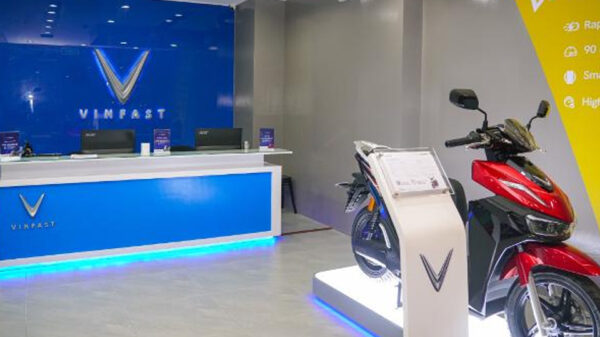
Several transport companies are introducing leasing programs and centralized EV fleet models designed to lower fuel and maintenance costs for drivers over time. Among them is Green GSM, which recently entered the Philippine market with a fully electric ride-hailing platform.
The emergence of EV fleets reflects a broader shift in how parts of the transport sector are beginning to think about operational sustainability. Increasingly, EVs are being viewed not only as a cleaner mobility solution, but also as a potential way to reduce cost uncertainty in a highly unpredictable operating environment.
“Initially, I thought EVs were mainly about the environment,” said one driver who previously operated a gasoline vehicle in Metro Manila. “But as fuel costs became harder to predict, I started seeing EVs as a way to make work more stable over the long term.”
“In highly congested urban environments, operators eventually start paying closer attention to total lifetime operating costs rather than simply vehicle acquisition costs,” Santiago said. “That changes how different mobility models are evaluated over time.”
Whether EV-based ride-hailing models can scale significantly across Metro Manila remains uncertain. Analysts say the answer will depend not only on vehicle technology itself, but also on the pace of charging infrastructure development, financing accessibility and how effectively the market supports drivers transitioning without major financial disruption.
For years, the biggest challenge in Manila’s ride-hailing industry was how to meet the growing transportation demand of an increasingly crowded city. Today, another question is beginning to emerge alongside it.
Can a transportation system built largely around gasoline-powered vehicles remain financially sustainable in a city where congestion, operating costs and income pressure are all rising at the same time?
For many drivers in Metro Manila, the question is no longer simply how to find more passengers during peak hours, but how to maintain stable earnings in a city where the cost of staying on the road continues to climb every day.