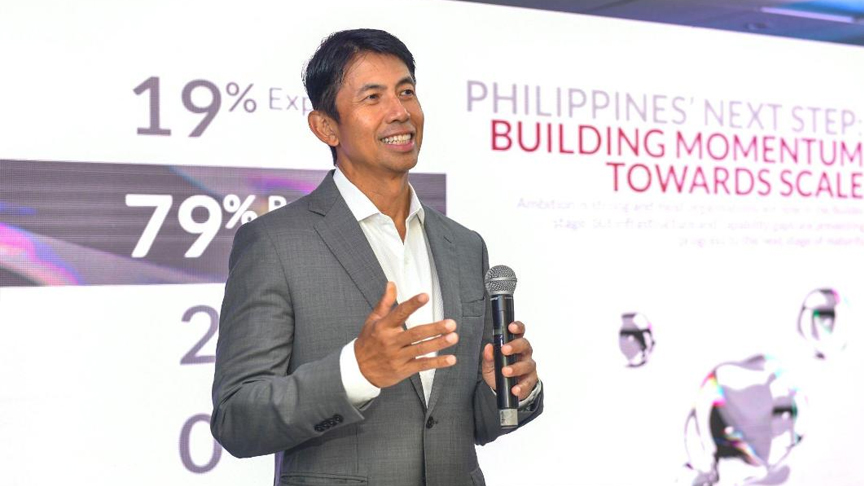
ST Telemedia Global Data Centres (STT GDC), one of the world’s fastest-growing data centre colocation service providers headquartered in Singapore, today released Philippines-specific findings from its latest research, Mind the Gap: Bridging the AI Infrastructure Readiness Divide, revealing a market with strong AI ambition but significant constraints in scaling capability.
The study shows that 79% of Philippine organisations are now in the “Builder” stage of AI adoption, actively deploying early operational AI solutions. However, only 2% have progressed to the “Integrator” stage and none have reached “Leader” status, while 19% remain in the Explorer phase, highlighting a sharp drop‑off beyond initial deployment and signalling structural barriers to scale.
While momentum is strong, the findings indicate that infrastructure limitations are becoming a binding constraint. 71% of respondents cite insufficient compute capacity, storage or network bandwidth as the number‑one barrier to advancing their AI initiatives. Although many organisations report that their networks can support basic AI workloads, 71% also say latency, bandwidth constraints and network bottlenecks are already limiting performance, reducing their ability to run more data‑intensive or mission‑critical AI models.
Talent shortages are compounding these challenges. More than three‑quarters (76%) of organisations report critical AI talent gaps, while 53% acknowledge they lack the in‑house expertise required to manage complex AI infrastructure and operations. Beyond specialist skills, workforce readiness remains uneven: 94% of respondents describe their organisational culture as sceptical, cautious or ambivalent towards AI, suggesting that adoption challenges extend beyond technology into organisational change and operating maturity.
“The data shows a clear pattern — Philippine organisations are investing and experimenting with AI, but many are reaching an infrastructure and capability ceiling,” said Carlo Malana, President and CEO, STT GDC Philippines. “Compute, storage and connectivity constraints, combined with a shortage of specialised operational expertise, are making it difficult to move from pilots to reliable, scaled deployment. Addressing these challenges together is essential if organisations are to fully realise the value of AI.”
Looking ahead, the research points to a growing future readiness gap. Nearly half (46%) of respondents expect AI workloads to grow by more than 50% over the next one to three years, yet only 3% say they are currently ready to scale high‑demand AI workloads. At the same time, 86% report investing 5% or less of their total IT budgets in AI, raising questions about whether current investment levels and infrastructure strategies are aligned with future growth expectations.
Mind the Gap: Bridging the AI Infrastructure Readiness Divide is a regional AI infrastructure readiness study commissioned by STT GDC and conducted by Ecosystm. The research surveyed enterprise and digital‑native organisations across Asia to assess AI maturity across five dimensions, including strategy, organisational readiness, data governance, current digital infrastructure and future AI infrastructure planning. Organisations were classified into four stages — Explorer, Builder, Integrator and Leader — based on aggregated readiness scores. The Philippines‑specific findings are based on responses from 62 organisations across multiple industries.
To download the full report, visit: https://www.sttelemediagdc.com/ai-infrastructure-readiness/home.