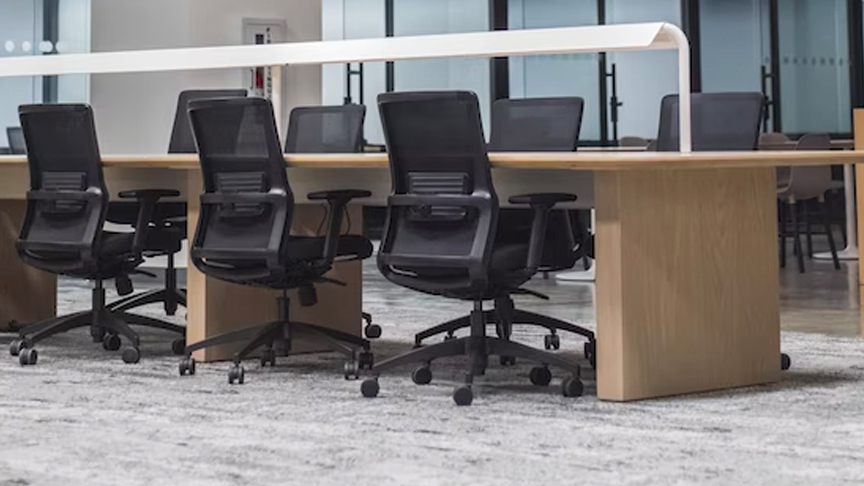
While most employees in the Philippines are willing to return to the office at least a few times a week, a new Cisco study found that more than half of employees believe that offices no longer fit their purpose. The study, which examines employee and employer attitudes about current workspaces, revealed that workspace design, layout and technology have not kept pace with changing employee expectations.
Titled “From Mandate to Magnet: The Race to Reimagine Workplaces and Workspaces for a Hybrid Future,” the study found that 93% of companies in Philippines have mandated a full or partial return to the office with productivity, team communication and leadership pressure as key drivers.
Contrary to the popular belief that most workers are reluctant to go back to the office, eight out of 10 (80%) employees in Philippines responded positively to their organization’s mandate to return to the office, and 89% of employee respondents expressed a desire to return to the office at least a few times per week.
“Our study reveals that employees in the Philippines have embraced hybrid work and are willing to return to the office more often, but with a caveat, workspaces must adapt to their evolving needs and expectations,” said Zaza Soriano-Nicart, Managing Director, Cisco Philippines. “In the era of hybrid work, employers need to reimagine their workspaces as a hub for collaboration and connect people in new ways with the right connectivity, collaboration tools, and culture.”
Despite the positive reception to the office return, employees’ motives for in-office work have significantly evolved. The main reason for their return is not individual work, but rather to collaborate (82%), ideate and brainstorm with colleagues (65%) and foster a sense of belonging (45%). This shift signifies a change in employee expectations and needs for their workspaces.
Workspaces do not reflect changing employee needs
Across Philippines, 37% of employees believe that their office is not fully fit for purpose to enable them to do their best work. In fact, when referring to office layouts and seating arrangements, 73% of employees feel these are not conducive to collaboration and brainstorming purposes. While there is a growing emphasis on collaboration, 78% of employers surveyed still allocate at least half of their offices to individual workspaces.
The study further highlights that workspaces are not ready for this new way of working. Employees feel that individual workstations (47%), large (55%) and small (69%) meeting rooms are ineffective at boosting productivity in the office, or only do so moderately at best.
Technology infrastructure and integration is also an area of concern. Among employers who find meeting rooms ineffective in boosting in-office productivity, the main reasons are inconsistency in the experience for remote and in-office participants (50%), lack of inclusive audio and video endpoints (46%), poor quality of audio-visual experience (43%) and insufficient audio and video endpoints (29%). On average, just over half (61%) of the meeting rooms across organizations are equipped with video and audio capabilities.
On a positive note, the study reveals that organizations are making progress to transform their office spaces. Eight out of 10 employers have already made changes post-pandemic and 89% plan to do so in the next two years. The main drivers of transformation include adapting to technological advancements (63%), meeting changing employee expectations for workspaces (54%) and better enabling hybrid work (42%).
“While employers are making progress in deploying collaborative technologies to support hybrid work, significant work remains to simplify the experience to better enable employees to more fully utilize these tools and technologies,” said Nicart. “Apart from providing access to technologies like smart meeting assistants, for example, employers need to make sure that their people are given appropriate training and support so they can be proficient in these technologies.”
The study is based on a double-blind survey of 9,200 full-time employees and 1,650 employers surveyed in November 2023. Respondents are from seven Asia Pacific markets including Australia, Hong Kong, India, the Philippines, Taiwan, Thailand and South Korea.