The conversations about how the pandemic has changed the way retailers do their business continue, especially since retailers still face significant shifts amid the ‘never normal.’
In a virtual event, ‘Retail Reimagined: How Technology Changes the Game of Retail in 2022,’ hosted last January by the Philippine Retailers Association (PRA) and co-presented by SAP SE, Gabriel Lorenzo Santos, Industry Business Architect – Retail and Consumer Products at SAP, discussed how technology is used to push the boundaries of retail and how it prepares retailers to what is yet to come.
Challenges amid the ‘Never Normal’
Like any other industry, retail is one of the most affected by the pandemic. A recent report by the World Bank and the National Economic and Development Authority (NEDA) revealed an 80 percent drop in visits to malls, restaurants, and movie theaters at the height of the pandemic in 2020 caused by lockdowns. Consumers also worry about the risk of exposure to COVID-19, impacting brick—and—mortar sales and revenues.
Last year, retailers also reduced employees due to mobility restrictions and vaccination regulations. It affected manual-labor-reliant organizations, resulting in slow master data and pricing updates, inaccurate inventorial, and many more.
“The ongoing pandemic taught us how retailers and businesses must quickly adapt to the fast changes in market conditions, consumer demands, and shopping habits. However, with technology disruption comes great innovation in physical and digital storefronts. It is essential for retailers to know the practical and creative use of technology to engage customers,” said Socorro Reyes-Bautista, PRA Director and President of Blooming Ventures, Inc., in her opening remarks.
To address the challenges amid the ‘never normal,’ Santos suggests the key action points in recalibrating retailers’ digital transformation strategies.
Understand Consumer Behavior
In 2021, the Philippine Statistics Authority (PSA) noted an increase in spending on various categories, such as food and non-alcoholic beverages, restaurants and hotels, furnishings, and household equipment for work-from-home setups even clothing and footwear.
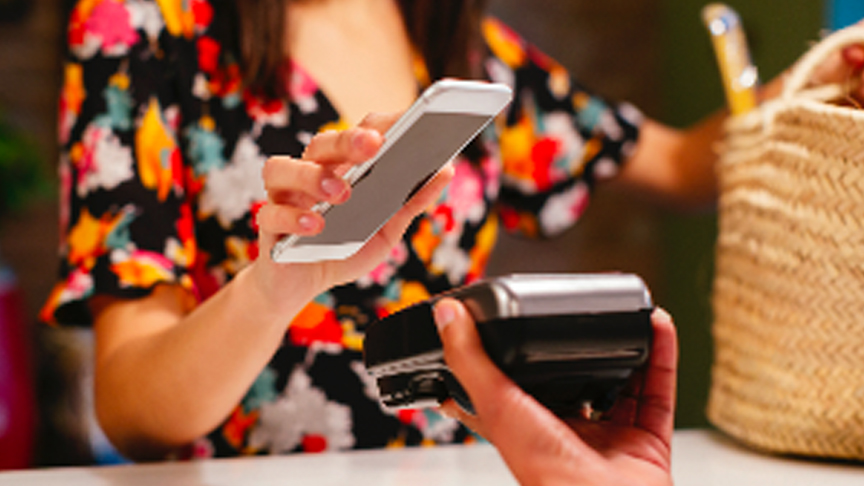
A recent study by Visa also revealed that nearly nine out of 10 Filipinos increased their digital shopping activities and are now utilizing online delivery services. Meanwhile, 73 percent of 1,014 respondents have adopted more contactless payments. Filipinos are also now more conscious of sustainable and socially responsible commodities.
Pinpoint Business Gaps to be Addressed
Identifying gaps that need to be addressed is also critical, whether product availability, delivery, or logistics. Businesses should know what an intelligent and agile enterprise looks like to help identify these gaps.
“An intelligent enterprise starts with having insights on processes that need improvement, automation, and innovation, coupled with cross-application analytics, delivering new dimensions of real-time and predictive insight and foresight,” said Santos.
At the heart of this strategy is an intelligent suite of applications providing core end-to-end processes and helping businesses manage every part of the organization, such as finance, employees, customers, services, and even IT. For SAP, integrating industry-specific cloud applications must also be part of this strategy, delivering highly verticalized and innovative applications to enrich business processes, specifically for retail.
The intelligent suite and industry cloud can be enveloped by experience and sustainability management solutions to help ensure that retailers hear their customers and adhere to their sustainability goals. These solutions run on a scalable business technology platform, serving as the standard architecture for analytics development and data storage, allowing enterprises to innovate much faster.
Finally, the business network takes this strategy outside the four walls of enterprises, allowing companies to collaborate with trading partners to drive connected processes and experiences.
Acknowledge Technology as a Strategic Driver
Some companies remain hesitant in integrating new technologies since acquiring them for a specific process is already troublesome, making it challenging to involve the entire enterprise. To address this problem, SAP offers RISE with SAP, a Business Transformation as a Service (BTaaS) offering that consolidates solutions and services needed for business transformation in one package.
“This full package aims to help businesses address transformation challenges and realize the value of an intelligent enterprise. It aids organizations to analyze how their processes perform and can be complemented, extended, and integrated with SAP and non-SAP applications using the same technology platform, making business models very flexible,” explained Santos.
RISE with SAP also utilizes SAP S/4HANA, helping businesses have a single platform to centralize, innovate, and standardize their enterprise resource planning (ERP) systems. It helps ensure that enterprises can organize operations across its several controlled entities, make their accounting, financial close, treasury, and risk management processes easier, and gain insights from end-to-end performance with process analytics.
‘Helping Bridge the Gap’
Nowadays, companies that thrive are those that adapt quickly. However, true transformation takes changing an organizations’ culture and shifting its mindset. It requires redesigning business plans and processes and demands new technologies that unlock new ways of running a retail business. Leveraging technology can help bridge the gap to ensure a seamless experience despite changing demands and buying behaviors, further improving the topline and bottom line.
“Across our customers, benefits have been reaped with the use of technology, such as improved customer satisfaction, reduced days in inventory, reduced customer churn, and even increased digital channel revenue, which are very relevant in today’s situation,” Santos concluded.