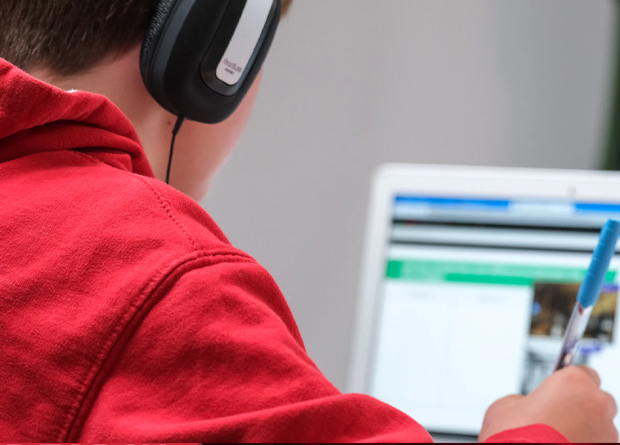
According to a recent Kaspersky survey, more than half of children in the Asia Pacific (APAC) region (55%) who switched to remote learning due to the pandemic prefer in-person education.
Although the percentage is high, with almost 1 in 2 Asian kids liking face-to-face classroom more than online sessions, it is lowest compared with other regions globally. Children in Latin America have the strongest preference for traditional education (75%), followed by Africa (73%) and the Middle East (58%).
Majority of kids in APAC dislike learning online because of having to spend so much time in front of a screen (74%). Frequent technical problems are also a bummer (60%).
For 57% of students, it is more difficult to understand educational materials on remote learning compared to offline classes. More than half also admitted missing playing and talking with their peers between classes.
However, almost half (45%) still noted that they liked remote learning better.
“The required transition to remote learning during the pandemic has been a real challenge for children, parents, and teachers alike. The curriculum needs to be quickly restructured so it doesn’t affect student learning. But unfortunately, due to various circumstances, this hasn’t always been possible. Based on our research, one in every five families, globally, says that the curriculum was fully adapted to the new conditions,” notes Andrey Sidenko, Head of Kaspersky’s Online Child Safety Department.
“Despite the fact that offline is still the most effective form of school education, in our opinion, it’s important to introduce various digital and interactive elements into the educational process.”
For children in APAC, the hardest subjects to learn remotely are the exact and natural sciences: mathematics (48%), chemistry (28%), physics (25%), and biology (25%). This trend is almost the same across the other regions globally.

As for parents from the region, 68% stated they don’t want to continue this learning format after the pandemic. Main reasons for this are concerns about children spending too much time in front of the screen (68%) and a general decline in the quality of education (48%).
“Remote learning during the pandemic has turned out to be stressful for everyone involved: children, parents, and teachers. However, adults didn’t always make the right decisions to help simplify their children’s lives because they too were adapting to the new format. This can be seen clearly in the poll. The conclusion is simple: when the modern world deals with a wild card, teachers have to master new teaching skills for remote learning using various digital tools in combination with offline learning,” comments Chris Connell, Managing Director for Asia Pacific at Kaspersky.
To keep your child safe online, regardless of what they’re doing – playing, studying, or chatting with friends – Kaspersky offers the Kaspersky Safe Kids solution. It lets parents know exactly how long their child spends online and also protects them from inappropriate content. In addition, parents can view their child’s current location, which can come in very handy if the child comes home from school alone.
Kaspersky Safe Kids is also included within the Kaspersky Total Security (KTS) solution that offers useful benefits for users such as encrypting browsers to protect online payment transactions, stopping identity thieves with its anti-phishing technology and securing passwords in a private vault.
Kaspersky Total Security also helps with users’ online privacy by encrypting data when using risky public wifi, hiding a user’s IP address even from the ISP, and ensuring that a user’s online transactions aren’t logged.