The customer has become increasingly influential in determining businesses’ strategies and shaping their reputations across the globe. For Southeast Asia’s SMEs in the retail and hospitality sectors, focusing on the customer experience has become even more important to the future of these businesses.
However, research has found that companies in Southeast Asia have significant ground to cover to improve customers’ perceptions of their experiences as consumers rank their experiences at an average of 50 percent of the potential score.[1]
In fact, ASEAN SMEs shared with Epson that managing customer experience was one of the top five business challenges they faced.[2] Companies need to start making smart investments in technologies that will help them deliver the experiences customers expect in order to stand out in a competitive market.
The technologies contributing to better customer experiences
Among the key trends influencing customer spending and preferences in Asia today are personalization of services and experiential, event-based shopping set-ups.
Online customers expect a richer and more interactive shopping experience, with more available channels and a wider range of product, service and payment choices as they go through their purchasing journey. Brands have to work much harder to attract and retain their customers’ attention.
To address these changes, retailers and F&B operators must build more agile business processes that optimize the use of technology, in order to enrich the customer experience and generate data insights that analytics can turn into lasting value.
To deliver richer customer experiences, SMEs can for example, use the latest printing and projector technologies to make stores, marketing displays and product labels stand out. Laser projectors can create stunning signage, displayed on walls, floors and ceilings to engage and inform customers. Using in-house label printers, retailers can create on-the-spot personalized packaging of their products for a customized experience.
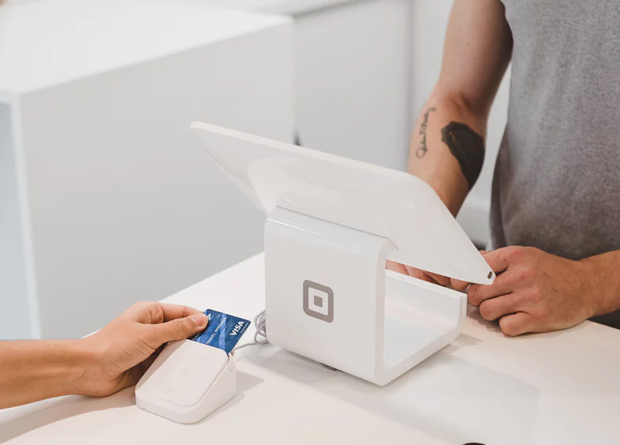
Similarly, intelligent point-of-sale (POS) printers with wireless connectivity enabling staff to serve customers anywhere in the store can improve customer interactions, reinforcing the quality of the company’s brand. Intelligent POS printers can even print directly from web applications for online purchases and food orders, reducing customer wait time and proving a smooth, positive experience.
Southeast Asian SMEs see positive results from focusing on customer experience
An Epson survey of 864 SMEs in the six largest Association of Southeast Asian Nations (ASEAN) nations by GDP found that the retail and hospitality cluster is leading the way in digital transformation. And 64 percent of respondents in this sector were initiating digital transformation efforts in the area of customer interaction, a far higher priority for them than new product development or production processes.
Across Southeast Asia, SMEs are realizing the impact that positive customer experiences can have on revenues. It has been shown that when brands focus on customer experience, revenue grows by an average of 23 percent.[3] Effective deployment of the right technologies at the retail front during the point-of-sale can indeed help brands innovate and differentiate themselves from the competition.
The consequences of not prioritizing customer experience
Customers are increasingly making purchase decisions based on their, and others’, experiences. Studies have shown that interactions with a company can make or break a purchase whether these transactions take place in-store or online. Companies that are slower to adopt technologies that can connect with other devices and software applications will have a harder time connecting with customers. Additionally, better connectivity through improved broadband infrastructure and services will help businesses deploy new technologies with the confidence that they will make a reliable contribution to operations.[4]
As a significant percentage of all ASEAN enterprises, SMEs are highly important to local economies. The retail and hospitality sectors in particular are significant contributors to each country’s GDP. As consumer spending power continues to grow in the region, SMEs must be equipped to deliver the kinds of experiences Southeast Asia’s younger generations demand. Indeed, it is only with the right technology investments can these goals be achieved.
[1] WARC, ‘Significant room to improve’ consumer experience in Southeast Asia, https://www.warc.com/newsandopinion/news/significant_room_to_improve_consumer_experience_in_southeast_asia/42350
[2] SMEs striving for Digital Transformation amidst many hurdles, https://www.epson.com.sg/digital-transformation
[3] Digital Market Asia: APAC brands focusing on customer experience grow 23%: Study, http://www.digitalmarket.asia/apac-brands-focusing-customer-experience-grow-23-study/
[4] OECD: Southeast Asia Going Digital, https://www.oecd.org/going-digital/southeast-asia-connecting-SMEs.pdf