














































































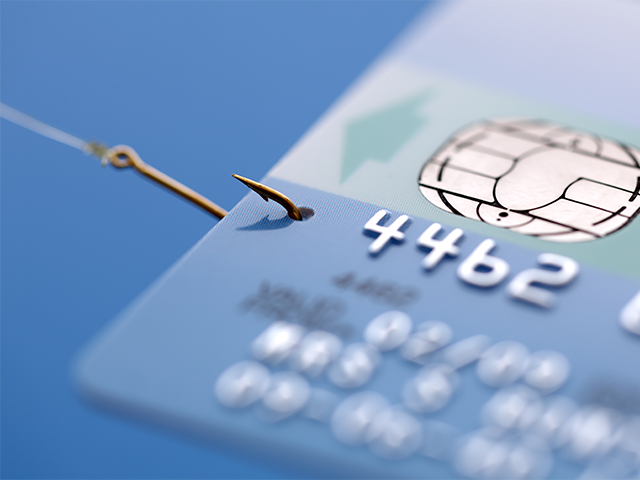
In the second quarter of 2018, Kaspersky Lab’s anti-phishing technologies prevented over 107 million attempts to visit phishing pages, of which 35.7% were related to financial services and targeting customers through fake banking or payment pages.
The IT sector was the second hardest hit, with 13.83 of attacks targeting tech companies, which is 12.28 percentage points more in comparison with the previous quarter, according to Kaspersky Lab’s ‘Spam and phishing in Q2 2018’ report.
The results above show that to protect their money, users should be extremely cautious about their security when they surf the Internet. Attacks on customers of financial organizations, including banks, payment systems, and e- shop transactions, are an enduring trend in cybercrime and involve the theft of money as well as of personal data.
By creating fake pages of banking, payment or shopping sites, intruders harvest sensitive information from unaware victims – such as their names, passwords, e-mail addresses, phone numbers, credit card numbers, and PIN codes.
The second quarter of 2018 flustered users of financial services, with 21.1% of attacks featuring banks, 8.17% online shops and 6.43% payment systems – comprising more than one third of attacks overall.
Brazil remained the country with the largest share of users attacked by phishers in the second quarter of 2018 (15.51%). This was followed by China (14.44%), Georgia (14.44%), Kirghizstan (13.6%), and Russia (13.27%).
Interestingly, there were almost 60,000 attempts to visit fraudulent web pages featuring popular crypto-currency wallets and exchanges, during the period from April to June. In addition to traditional phishing, which helps to access victim accounts and private key information, cybercriminals try to force their victims to independently transfer crypto-currency to them.
One of the tricks is the free distribution of the crypto-currency. Another trick is for scammers to exploit the names of new ICO projects to raise funds from potential investors. Using these two tricks, according to Kaspersky Lab rather rough estimates, over the past quarter, intruders managed to earn at least $2,329,317, even without taking into account any revenues from classic phishing.
“The permanence of attacks targeting financial organizations reflects the fact that more and more people are using electronic money. Still, not all of them are sufficiently aware of the possible risks. So, intruders are actively trying to steal sensitive information through phishing,” said Nadezhda Demidova, lead web content analyst at Kaspersky Lab.
Phishing
The main targets of phishing attacks have remained the same since the end of last year. They are primarily global Internet portals and the financial sector, including banks, payment services and online stores.
In comparison with Q1, the share of attacks on financial organizations decreased by 8.22 percentage points and became 35.7%. However, IT companies added 12.28 percentage points. The share of attacks on these companies in Q2 was 13.83%.
Spam
In the second quarter of 2018, the amount of spam peaked in May (51%). The average share of spam in the world’s email traffic was 50%, which is 2.16 percentage points lower than the average figure of the last quarter of 2017.
China became the most popular source of spam, overtaking the U.S. and Germany. The country most targeted by malicious mailshots was Germany, once again. Russia came second, followed by the United Kingdom, Brazil, and Italy.
Kaspersky Lab experts advise users to take the following measures to protect themselves from phishing:
- Always check the link address and the sender’s email before clicking anything.
- Before clicking any link, check if the link address shown, and is the same as the actual hyperlink (the real address the link will take you to) – this can be checked by hovering your mouse over the link.
- Only use a secure connection, especially when you visit sensitive websites. As a minimum precaution, do not use unknown or public Wi-Fi without a password protection. For maximum protection, use VPN solutions that encrypt your traffic. And remember: if you are using an insecure connection, cybercriminals can invisibly redirect you to phishing pages.
- Check the HTTPS connection and domain name when you open a webpage. This is especially important when you are using websites which contain sensitive data – such as sites for online banking, online shops, email, social media sites etc.
- Never share your sensitive data, such as logins and passwords, bank card data etc., with a third party. Official companies will never ask for data like this via email.
- Use a reliable security solution with behavior-based anti-phishing technologies, such as Kaspersky Total Security, to detect and block spam and phishing attacks.