



























































From artificial intelligence to the Internet of Things (IoT), far-reaching innovations are unfolding in virtually every technology sector around the globe, continuing to change the way consumers, businesses and machines interact while also spurring the next revolution in tech market growth, according to a new white paper from IHS Markit.
For the white paper, IHS Markit surveyed its leading technology experts, who represent various industry segments including advertising, automotive, connected networks, consumer devices, entertainment, displays, media, semiconductors, telecommunications and others. These analysts were asked to provide their informed predictions for the global technology market in the New Year.
The Top Seven Technology Trends for 2017, as identified in this IHS Markit report and listed in no particular order, are as follows:
Trend #1 – Smart Manufacturing Accelerates With More Real-World Products
- Companies use IoT to transform how products are made, how supply chains are managed and how customers can influence design.
- Example: look for automation/operator tech firms to release their own Platforms-as-a Service (PaaS) offering in the cloud as they compete to offer and own IoT projects for the industrial market.
Trend #2 – Artificial Intelligence (AI) Gets Serious
- Already, personified AI assistants from a handful of companies (Amazon’s Alexa, Apple’s Siri) have access to billions of users via smartphones and other devices.
- However, even bigger, more profound changes are on their way as levels of human control are ceded directly to AI, such as in autonomous cars or robots.
Trend #3 – The Rise of Virtual Worlds
- After several years of hype, the operative reality behind virtual, augmented and mixed digital worlds is set to manifest more fully in 2017. The technology for augmented reality (AR) and virtual reality (VR) will advance significantly as Facebook, Google and Microsoft consolidate their existing technologies into more exhaustive strategies.
- New versions of VR-capable game consoles featuring 4K video and high dynamic range (HDR) will also create the medium for high-quality VR content, even if availability will be limited for the next few years.
Trend #4 – The “Meta Cloud” Era Arrives
- Communication service providers plan to deliver a new wave of innovation, allowing for a single connection to the enterprise and acting as a gateway to multiple cloud service providers. IHS Markit refers to this as the meta cloud.
- In 2017, new offerings will become available from traditional Software-as-a-Service (SaaS) vendors, coupled with expanded offers from the likes of IBM, Amazon and— most notably—Google via its Tensor chip. Watch for the development and deployment of more specialized silicon in the next two years.
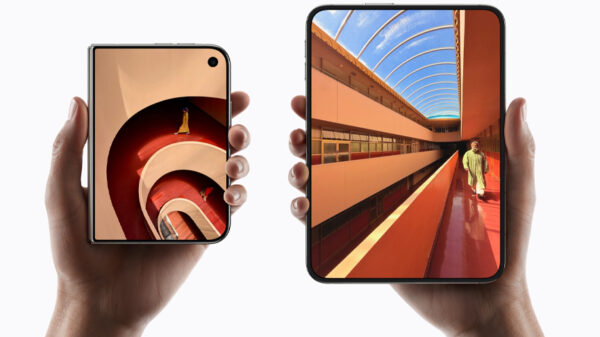
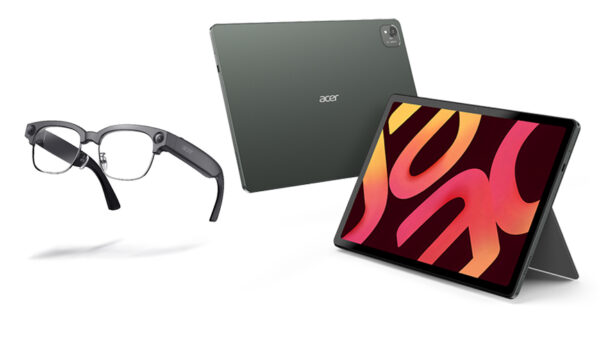
Trend #5 – A Revolution in New Device Formats
- The development of the consumer drone is the closest example of a product type evolved over the past few years that has quickly gone mass market. 3D printers and pens are heading the same way.
- The next set of new devices may well materialize at the boundary of cheap 3D printing and inexpensive smartphone components to create completely novel device types and uses.
Trend #6 – Solar Still the Largest Source of Renewable New Power
- The next year, 2017, will see photovoltaic (PV) technology retaining—and confirming—its position as the planet’s largest source of new renewable power.
- More than a quarter of all PV capacity added worldwide in 2016 and 2017 will be in the form of solar panels. The growth of solar can be attributed to sharp drops in the cost of PV systems, combined with favorable country policies toward new renewable power.
Trend #7 – Low-Power Technologies Extend Reach to Inaccessible IoT Devices
- The first batch of low-power, wide-area networks (LPWAN) will go live around the world in 2017 as an alternative to short-range wireless standards such as Wi-Fi and Bluetooth. LPWAN technologies will connect hard-to-reach, IoT devices more efficiently and at a lower cost, dealing with challenges stemming from range limitation to poor signal strength. As a result, opportunities will open up for telecom providers to support low-bit-rate applications.
- In turn, the increased availability and low cost of LPWAN technologies will drive connectivity for smart metering, smart building and precision agriculture, among many other applications.