




















































































A study of 2,000 consumers across generations, from Gen Z to Baby Boomers, finds 74 percent of millennials (20-39) and Gen Z (16-19) object to being targeted by brands in their social media feeds. In fact, 56 percent of these digital natives report cutting back or actually stopping use of social media sites entirely due to advertisements in their news feed.
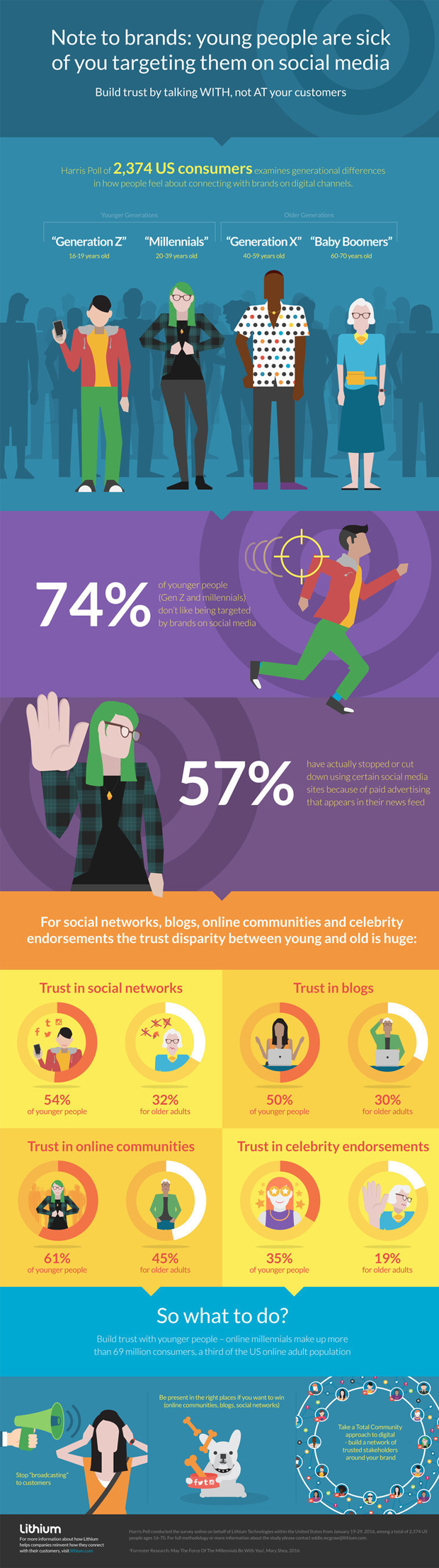
Brands are eagerly trying to build trust and loyalty with consumers through social media, but it appears many may be missing the mark according to a new Harris Poll conducted on behalf of Lithium Technologies. Results reveal that direct targeting on social via ads can actually lose customers, and that a far more effective method of reaching today’s digital generations is to be present on the channels they frequent, and let them seek one out.
“Pushing out ads on social media is the surest way for brands to alienate consumers, especially the younger generations who make up more than 50 percent of the population,” said Rob Tarkoff, President and CEO of Lithium Technologies. “That’s a lot of purchasing power, and it’s only going to grow as these generations reach their prime spending years. The promise of social technologies has always been about connecting people, not shouting at them, and the brands that don’t do this risk their very existence.”
“I go on social media to see and know what my friends are doing. I don’t want to see ads clutter my news feed. If I’m interested in a product or service, I know where to look,” said 23-year-old recent graduate, Mallory Benham. “Social media is a place for us to connect with our friends, not be attacked by advertisements.”
Today’s younger consumers, raised almost entirely in the digital era, are much more likely to trust information they seek out themselves – whether on blogs, websites or online communities. The survey indicates where younger and older generations place their trust in online sources.























