




















































































PLDT Inc. (PLDT) and its wireless unit Smart Communications, Inc. (Smart) continue to advance their mission of bridging the digital divide, especially in geographically challenged areas and other underserved communities across the Philippines.
Through sustained investments in both network infrastructure and community programs, the PLDT group has expanded digital access and empowered over 6,400 Filipinos all over the country with skills and opportunities. These initiatives are part of the Group’s long-standing commitment to building a connected, inclusive, and sustainable future for all. Building on its strong network foundation, the PLDT Group leverages technology-driven programs to reach marginalized sectors and create meaningful, lasting change.
“Every improvement we make—whether in efficiency or coverage—is part of the larger work of empowering communities and supporting the Philippines’ growth,” said Manuel V. Pangilinan, PLDT and Smart Chairman and CEO.
Key milestones in the first half of 2025
In the first half of 2025, the PLDT group, through its flagship corporate advocacy program, PLDT and Smart Communities, achieved significant milestones across various fronts:
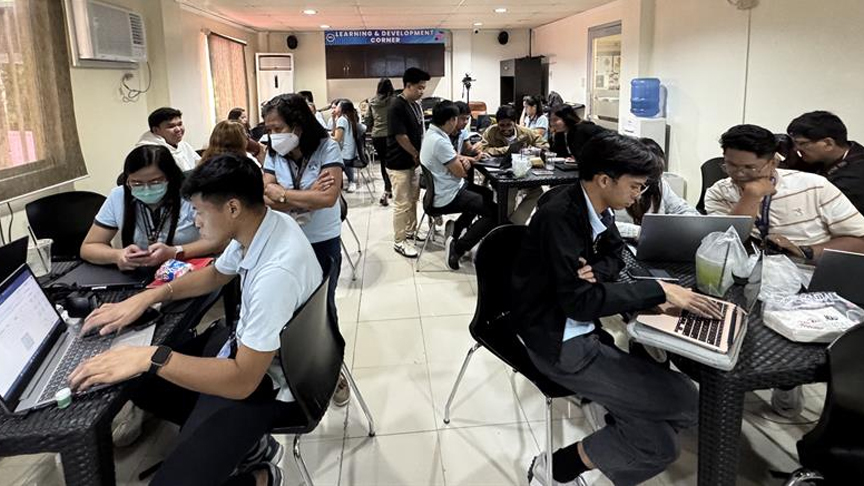
Digital wellness: The Group rolled out AI-in-a-Box, a new digital empowerment initiative from PLDT and Smart that brings the power of artificial intelligence (AI) closer to communities. To date, the program has reached over 1,100 media practitioners, LGU staff, freelancers, farmers, persons with disabilities, women at risk, and MSMEs with AI-focused training to make artificial intelligence tools more accessible across sectors. The #BeCyberSmart campaign reached over 2,000 students, teachers, parents, MSMEs, farmers, and media practitioners, raising awareness on cybersecurity. The group also supported the Department of Justice-Inter-Agency Council Against Trafficking (DOJ-IACAT) as it rolled out the #BetterTodayForKids awareness campaign in public schools against online sexual abuse and exploitation of children (OSAEC), and human trafficking.
Disaster resilience: The group has worked with the Department of Information and Communications Technology (DICT) in enhancing emergency communications planning of DICT regional offices nationwide. This training program is a key component of PLDT and Smart’s Ligtas Kit, a portable, all-in-one package designed to keep communities and first responders connected during typhoons, earthquakes, and other disasters.
Education: In partnership with the Department of Education, the PLDT group has ramped up preparations for the nationwide rollout of the Central Visayan Institute Foundation Dynamic Learning Program (CVIF-DLP), an innovative teaching strategy that promotes independent learning. PLDT and Smart also deployed School-in-a-Bag packages to benefit over a thousand educators and about 1,500 learners. PLDT and Smart have also launched Tuon Ta, a mother-tongue numeracy and literacy app to strengthen foundational learning.
Livelihood: The group has equipped close to 500 farmers and over a thousand MSMEs with ICT literacy and digital entrepreneurship skills under its Digital Farmers Program (DFP) and eBiznovation initiatives to help boost livelihood opportunities in the digital economy.
Inclusion: Under its group-wide Diversity, Equity and Inclusion (DEI) thrust, PLDT conducted digital skills trainings for persons with disabilities and supported their digital entrepreneurship journey.
Scaling up in the second half of 2025
These milestones are supported by the PLDT Group’s extensive network, which includes around 1.2 million cable kilometers of fiber, passing 19.01 million homes in 74% of the country’s towns and 91% of provinces. Smart’s combined 5G/4G network covers around 97% of the population. This strong infrastructure foundation will further expand access to digital tools and services, improve quality of life, and enhance community capacity and resilience.
“Digital inclusion is also about creating a meaningful impact in people’s lives,” said Roby A. Alampay, FVP and Head of Public Engagement and Corporate Communications at PLDT and Smart. “Through our network and our partnerships, we will do our part in ensuring that no Filipino is left behind.”























