PLDT Inc (PLDT)’s wireless Smart Communications, Inc. (Smart) has successfully tested transport network disaggregation technology to make its infrastructure more efficient, flexible and scalable.
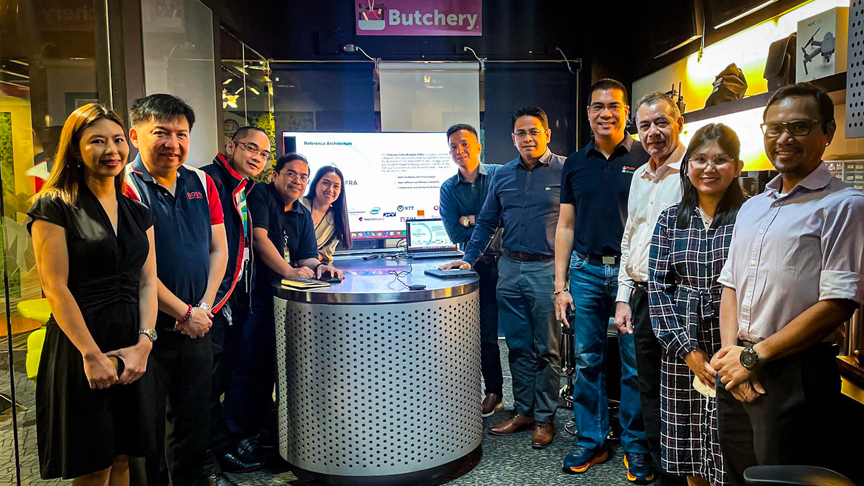
A first in the Philippines, the demo was carried out at the PLDT-Smart Technolab in Makati in collaboration with various hardware and software platform vendors.
In telecommunications, the transport network is that largely unseen part of the infrastructure which provides the means by which data, video, voice and other communication signals are carried from one point to another.
Envisioned to revolutionize network infrastructure and operations, transport network disaggregation is seen to empower telco operators like PLDT and Smart with greater flexibility, cost efficiency, and agility through innovations that allow them to quickly adapt to fast-changing market conditions, deploy new services and meet the growing demands of customers and businesses.
“The disaggregated network technology is a significant milestone achievement as we transform our end-to-end network towards a fully Software Defined Network (SDN) and Cloudified network,” said Eric Santiago, FVP and Head of Network at PLDT and Smart.
“It is a game-changing approach to network infrastructure, and its benefits will, in turn, allow PLDT and Smart to provide better, innovative and affordable services, and pave the way for future innovation and transformation of the transport network,” Santiago added.
Unlike traditional network architecture, which relies on proprietary hardware and software from a single vendor, and is costly, rigid, and difficult to upgrade or modify, disaggregated networks allow telco operators to use open, interoperable, and standardized hardware and software components from different vendors.
“Our company’s digital transformation journey, which began several years ago, has focused on our goal to fully virtualize and containerize our end-to-end network: from Core, to Access, to Transport,” said Arvin L. Siena, VP and Head of Network Strategy and Transformation Office at PLDT and Smart.
“The virtualization of routing function and its disaggregation from the hardware platform is a positive step towards the overall transformation of the transport network architecture, which promises to bring more flexibility, agility, and cost efficiency to our backbone infrastructure. The successful functionality and interoperability test conducted in our laboratory indicates that the solution is approaching the maturity stage”, Siena added.
In addition to meeting the demands of PLDT and Smart’s ongoing end-to-end network transformation, disaggregated networks also allow telco networks to be flexible in selecting and integrating multiple software and hardware vendors, speeding up innovation and technology evolution, and eliminating the dependence on a single vendor. New hardware and software components can also be added or replaced without disrupting the entire network.
PLDT operates the country’s most extensive fiber infrastructure. As of end-September 2023, PLDT had expanded its total fiber footprint to over 1.1 million kilometers, consisting of over 0.2 million cable kilometers of international fiber and about 0.9 million cable kilometers of domestic fiber. This fiber infrastructure also supports Smart’s mobile network, which covers 97% of the population with 3G, 4G/LTE and 5G.
PLDT and Smart’s network improvement initiatives are aligned with the Group’s initiatives to level-up customer experience and support the Government’s overall digitalization thrust as one of the founding members of the government-mandated Presidential Private Sector Advisory Council (PSAC) under the Digital Infrastructure Pillar.