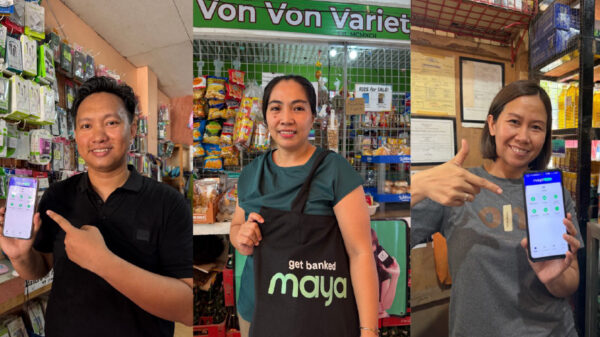
A recent survey by global analytics software firm FICO has revealed that 56% of Filipino consumers prefer to use digital channels to engage with their bank during financial hardship.
The poll conducted in December 2020, during the height of the global COVID-19 pandemic, demonstrates the willingness of consumers to embrace digital banking and the opportunities that exist for banks to further develop their offering.
The high level of smartphone penetration in the Philippines meant that 29 percent of Filipinos preferred to communicate about hardship via their mobile banking app; 12 percent used internet banking; 9 percent communicated via email; 4 percent preferred telebanking and 2 percent wanted to use virtual conference technology.
“The risk of infection and social distancing requirements made branch visits less appealing last year, accelerating a shift to digital banking channels globally,” said Aashish Sharma, risk lifecycle and decision management lead for FICO in Asia Pacific. “Being able to deliver and manage numerous channels in line with customer preference and deliver a seamless and engaging experience is a challenge that is here to stay. Investment in customer management and communication tools that span these channels and product silos, and can deliver personalization and improved decision making, is key to making digital banking a success.”
Customer attitudes to new technology from banks such as debt collection automation can yield some interesting preferences and behaviors.
“It is worth noting that during periods of hardship, some customers prefer to deal with the issue using intelligent, automated online services, such as our FICO Customer Communication Services (CCS) so as to avoid the embarrassment of talking to an agent about outstanding loans. If customers prefer digital channels during times of hardship, their most difficult time, it seems to me we can expect branch banking to continue its decline.” explained Sharma.
Importance of maintaining banking relationships
Banks still have a data and relationship advantage when compared to fintech challengers. The survey revealed that across Asia Pacific, one in three consumers preferred to have all their banking needs serviced by one bank. In the Philippines this was higher at 40%, with a further 34% saying that they ‘somewhat agreed’ they would like to deal with just one primary bank.
“Managing multiple bank accounts or finance products with different lenders can often be a complex, time-consuming and costly process for the average banking customer,” said Sharma. “Digital banking users today are looking for greater control and visibility of their financial position.”
When asked about their willingness to try a fintech or challenger bank, 24% of Filipinos said that they were inclined to consider a competitor with a further 43% relatively open to the idea.
“To consolidate and strengthen main bank engagement, lenders need to offer digital banking features that compete with the challengers to ensure the stickiness and viability of long-term customer relationships,” added Sharma.
Most appealing reasons to switch banks
When asked about the reasons they would make the switch to a competitor, 38 percent of Filipino consumers said their number one reason would be to secure improved personalization and controls in their digital banking service. The poll defined this as the ability to view transaction history, update personal details, reset passwords and other such functions. Interestingly, personalization and control was also the top reason for switching across Asia Pacific (31%).
Other top switching drivers across Asia Pacific were; the ability to control a payment card (set transaction limits, lock/unlock); the ability to set up recurring payments; and improved security features such as biometrics and two-factor authentication.
FICO’s Advancing New Experiences in Digital Banking survey was conducted in December 2020 using an online, quantitative poll of 5,000 consumers across ten countries, carried out on behalf of FICO by an independent research company. The countries surveyed were Australia, Hong Kong, Indonesia, Malaysia, New Zealand, Philippines, Singapore, Taiwan, Thailand and Vietnam.