







































































Connect with us

Hi, what are you looking for?

HEADLINES

HP Phl launches HP Multi Jet Fusion 3D printing solutions

HP Philippines launched HP’s Multi Jet Fusion technology with the introduction of the HP Jet Fusion 3D 4200 and 4210 printing solutions. Together with WordText Systems Inc. (WSI), HP aims to drive production-ready applications across sectors such as healthcare, manufacturing and engineering.
The HP Jet Fusion 3D 4200 Printing Solution revolutionizes design, prototyping and manufacturing, and for the first time, delivers physical parts up to 10 times faster and at half the cost of current 3D print systems. By printing functional parts for the first time at the individual voxel level (a voxel is the 3D equivalent of a 2D pixel in traditional printing), HP offers customers an ability to transform part properties and deliver mass customization.
The new HP Jet Fusion 3D Print 4210 solution lowers overall operating costs while increasing production volume capabilities, raising the “break-even point” for large-scale 3D manufacturing to up to 110,000 parts and enabling the industry’s lowest cost-per-part (CPP) – up to 65% less than other 3D printing methods.
To ensure consistent part quality for each product, the materials used in HP Multi Jet Fusion 3D Printing undergo a multi-agent printing process, which uses both detailing and fusing agents that work together to create fine details and smooth surfaces in each printout. HP Jet Fusion 3D Printing solutions also come fitted with continuous printing and fast cooling technology and an automated materials preparation and post-processing station that streamlines print workflows.
This changes the game for how companies in the Philippines can fundamentally change the way they conceive, design, produce, distribute and consume, allowing them to be more efficient in prototyping, production, and supply chain digitization.
HP also offers a unique approach to 3D printing materials development with its Open Materials Platform. The collaborative materials partner ecosystem features a growing list of global players that includes Arkema, BASF, Dressler Group, Evonik, Henkel, Lehmann & Voss, Lubrizol and Sinopec Yanshan Petrochemical Company. New materials are being developed at HP’s innovative 3D Open Materials and Applications Labs and will broaden the uses and capabilities of HP Multi Jet Fusion technology and open a world of new high-volume applications.

HP Philippines launched HP’s Multi Jet Fusion technology with the introduction of the HP Jet Fusion 3D 4200 and 4210 printing solutions. Together with WordText Systems Inc. (WSI), HP aims to drive production-ready applications across sectors such as healthcare, manufacturing and engineering.

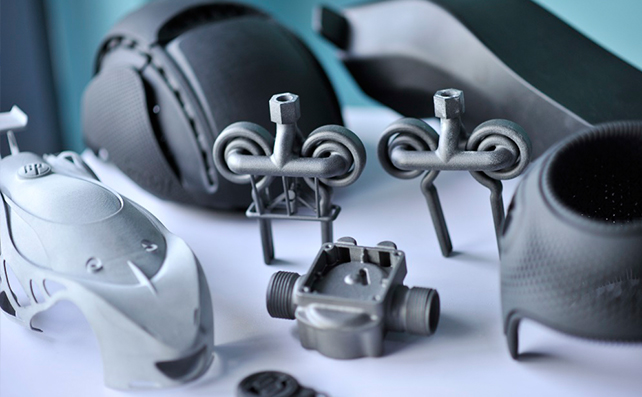
The HP Jet Fusion 3D 4200 Printing Solution revolutionizes design, prototyping and manufacturing, and for the first time, delivers physical parts up to 10 times faster and at half the cost of current 3D print systems. By printing functional parts for the first time at the individual voxel level (a voxel is the 3D equivalent of a 2D pixel in traditional printing), HP offers customers an ability to transform part properties and deliver mass customization.

The new HP Jet Fusion 3D Print 4210 solution lowers overall operating costs while increasing production volume capabilities, raising the “break-even point” for large-scale 3D manufacturing to up to 110,000 parts and enabling the industry’s lowest cost-per-part (CPP) – up to 65% less than other 3D printing methods.
To ensure consistent part quality for each product, the materials used in HP Multi Jet Fusion 3D Printing undergo a multi-agent printing process, which uses both detailing and fusing agents that work together to create fine details and smooth surfaces in each printout. HP Jet Fusion 3D Printing solutions also come fitted with continuous printing and fast cooling technology and an automated materials preparation and post-processing station that streamlines print workflows.

This allows companies to be more efficient in prototyping, production, and supply chain digitization.

HP also offers a unique approach to 3D printing materials development with its Open Materials Platform. The collaborative materials partner ecosystem features a growing list of global players that includes Arkema, BASF, Dressler Group, Evonik, Henkel, Lehmann & Voss, Lubrizol and Sinopec Yanshan Petrochemical Company. New materials are being developed at HP’s innovative 3D Open Materials and Applications Labs and will broaden the uses and capabilities of HP Multi Jet Fusion technology and open a world of new high-volume applications.


Advertisement. Scroll to continue reading.
Advertisement
Advertisement
Advertisement

Like Us On Facebook

You May Also Like

HEADLINES

Cybercriminals are increasingly weaponizing AI, with doxing emerging as a particularly alarming use case. 

HEADLINES

ASEAN Leaders are advancing a unified regional declaration on AI-powered MSME growth, establishing a coordinated regional commitment to harness artificial intelligence as a practical...

HEADLINES

The two companies recently renewed their partnership, enabling Royal Cable to leverage PLDT's extensive network infrastructure and last-mile connectivity capabilities to serve customers in...

HEADLINES

Additional improvements to Agent Connect include SDK partner packages, product capabilities, and developer tooling, making it easier for teams to integrate Twilio services into...

HEADLINES

Revenues from information and communications technology (ICT) services grew 20% during the period, reflecting increasing investments by Philippine businesses in technologies that improve operations,...

HEADLINES

PureVoice is a pioneering service that uses artificial intelligence (AI) noise cancellation to filter out background noise during calls, so conversations stay clear even...

HEADLINES

HP WXP helps IT teams gain visibility into device, application and workplace experience data, enabling a more proactive approach to identifying and addressing technology...

HEADLINES

94% of enterprises surveyed faced at least one sovereignty challenge in the last three years, including AI-provider failures, regulatory conflicts, critical vendor disruption, government...

Advertisement




















