





















































































A global authority in radiation safety affirmed proximity to cell sites does not cause any known health risks, contrary to what many homeowner associations (HOAs) in the Philippines believe.
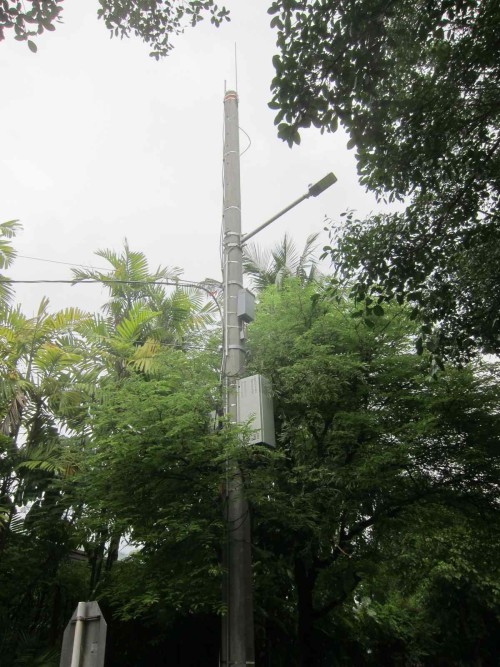
Globe Telecom is the only telecommunications service provider in the country to utilize outdoor distributed antenna system (ODAS) solution, which provides stronger mobile phone signals minus the towering cell sites. Photo shows an actual ODAS deployed in an exclusive subdivision in Metro Manila.
Dr. Rodney Croft, chairman of the International Commission on Non-Ionizing Radiation Protection (ICNIRP) High-Frequency Guidelines Project Group emphasized there are no risks but only benefits in deployment of cell sites necessary for the country’s growing requirement for digital connectivity.
“We have no reason to think that anyone getting exposed to cell site towers are going to be adversely affected in terms of their health. Large amount of research has failed to find any evidence that anyone has been hurt just because they were exposed to these telecom facilities,” Croft said.
According to Croft, the ICNIRP guidelines determine the lowest value of radio frequency (RF) radiation that could affect human health, establishing basic safety limits. Restrictions are then set at levels below threshold for any health effects.
In the case of the Philippines, the government requires adherence to ICNIRP guidelines so that exposure to radio frequency radiation is below what ICNIRP says is safe.
Health Assistant Secretary Dr. Agnette Peralta, who is currently a member of the Main Commission of ICNIRP, echoed Croft’s position adding that, “The Philippines standard was made even lower than the established guidelines – up to 4 times lower and the exposure is only thermal or heat”.
ICNIRP is formally recognized as an official collaborating non-governmental organization by the World Health Organization (WHO) and the International Labor Organization (ILO). ICNIRP, which aims to protect people and the environment against adverse effects of non-ionizing radiation, develops and disseminates science-based advice on limiting exposure to non-ionizing radiation (NIR). Experts from different countries and disciplines such as biology, epidemiology, medicine, physics, and chemistry, work together with and within ICNIRP to assess the risk of NIR exposure and provide exposure guidance.
Globe Telecom has taken up the sore issue of challenges in building cell sites as it noted that many HOAs oppose cell site proposals made by company due to alleged health hazards. Globe emphasized that the country badly needs to build new sites if it wants to overcome signal problems and access to internet services. Today, the Philippines only has 16,400 sites serving 129.4 million mobile customers, the lowest site density compared to its Asian neighbors.
For many years now, Globe has been dealing with permitting challenges related to the construction of telecommunication facilities, including cell sites at the LGU level. On top of this is the opposition from various HOAs in the country against said facilities due to alleged health issues. Globe Telecom’s aggressive bid to build more cell sites is in line with its commitment to expand network coverage and capacities for better internet experience of its customers.