Last September 21, The Department of Finance (DOF) and the Bureau of Internal Revenue (BIR) instructed all business establishments and individual taxpayers not to use thermal paper in issuing receipts.
The regulation stated that all taxpayers (individuals or businesses) are required to preserve their books of accounts, including subsidiary books and other accounting records, for a period of ten (10) years – an impossibility with receipts printed on thermal paper. As such, new business registrants must use non-thermal paper while existing registered taxpayers (who are currently using thermal receipts), have a three-year transition period to conform to the regulation.
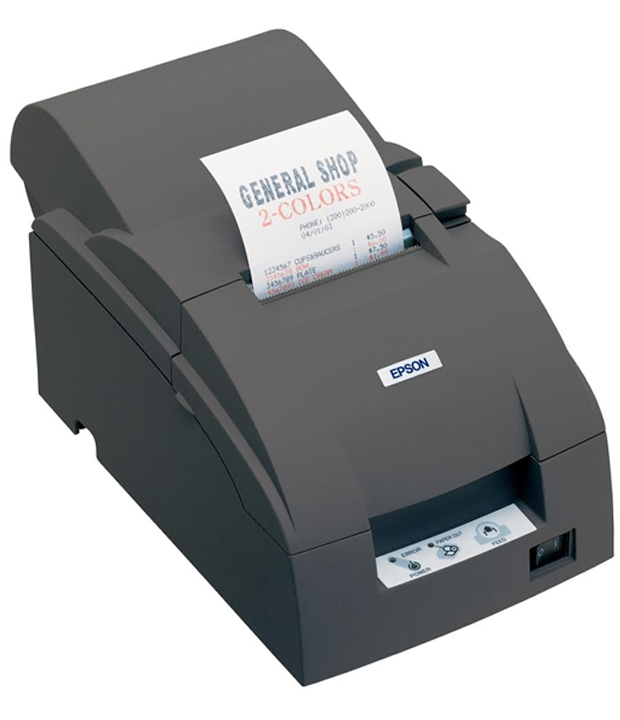
Epson Philippines aims to help customers using thermal POS printers on this new government regulation by offering its Epson printer technology that can be used for POS systems: dot matrix technology. The print outs from the dot matrix printers do not fade, and are therefore perfect for financial record-keeping purposes.
“We are equipped to provide even more trusted solutions to our customers by aiding them to comply with the new government regulation banning the use of thermal paper for receipts. There’s a reason why Epson’s dot matrix printers dominate the category – new users would be delighted in the uncompromising reliability and efficacy of our printers,” Thea Austria, product manager of Epson Philippines’ POS systems, said.
Epson offers a range of advanced technology solutions found in POS systems around the world. This includes Epson’s flagship model and industry-standard TM-U220 series.
On the other hand, Epson’s TM-U950 multifunction POS printer is a high performance 2.5 station printer that is a perfect choice for large POS systems used by mass merchandisers and other large retailers. Aside from receipts, it also handles a variety of printing formats including journals and slips. Other models include: TM-U295, TM-U590, and TM-U675.
Epson has extensive driver support for various platforms — ESC/POS, OPOS, Windows, JavaPOS, and Linux. For more information about Epson’s dot matrix POS printers, visit www.epson.com.ph/pos.