Connect with us

Hi, what are you looking for?

HEADLINES

INFOGRAPHIC | Why cybercriminals need your smartphone

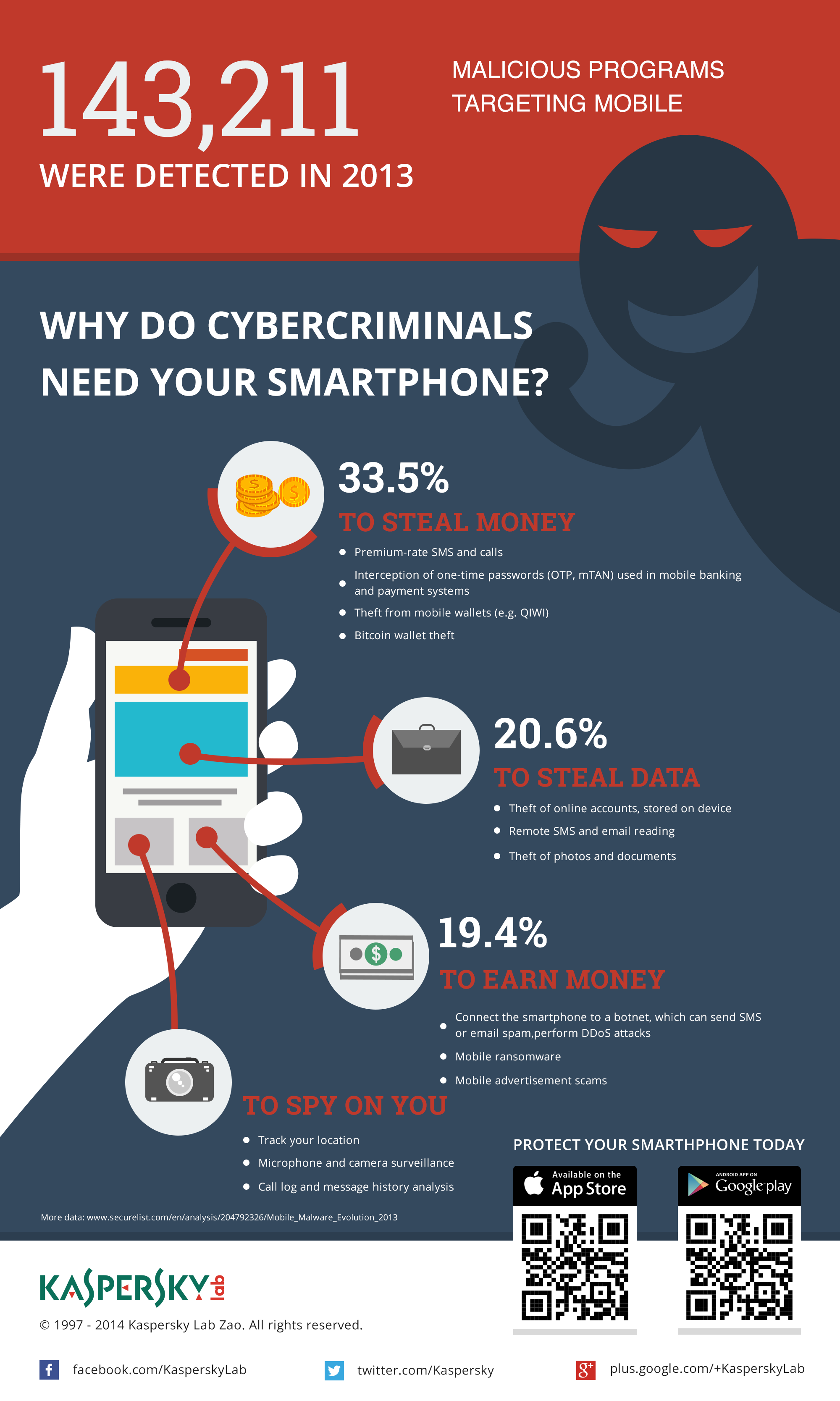
Mobile malware is the hottest topic among cybercriminals and the number of malicious mobile apps is rapidly growing.

The reason for that is obvious – there are multiple ways to earn money on infecting your smartphone – ranging from direct theft to rather geeky stuff like bitcoin mining.

Take a look at Kaspersky Lab’s infographic below to figure out what assets on mobile require a dedicated protection solution.

KL_IG_Why Cybercriminals need your Smartphones

Advertisement
Advertisement
Advertisement

Like Us On Facebook

You May Also Like

HEADLINES

Organizations must implement a risk assessment methodology that is aligned with their operational realities – by establishing a clear asset baseline, organizations can engage...

APPS

Experts suggest that the goal of the attackers is to steal cryptocurrency assets from residents of Southeast Asia and China. Users in the Philippines...

White Papers

Nearly 50% of companies paid the ransom to get their data back – the second highest rate of ransom payment for ransom demands in...

GAMING

To help players stay safe, Kaspersky is launching “Case 404” — an interactive cybersecurity game that teaches Gen Z how to recognize threats and protect their...

HEADLINES

A zero-trust secure connection has many applications beyond automotive. It’s really for any industry that cares about security, and managing that security at scale.

HEADLINES

Organisations across the Asia-Pacific and Japan region are putting their security posture first, and many are now detecting intrusions early in the attack lifecycle,...

HEADLINES

Agentic AI Assistants—such as Apple Siri, Google Gemini, Microsoft Copilot, OpenAI ChatGPT, and others—are increasingly available to mobile users in consumer and enterprise environments. However, the same...

HEADLINES

Based on breach-tracking research conducted for over two decades, over 124 million Filipino user accounts have been compromised since 2004. This puts the Philippines...

Advertisement